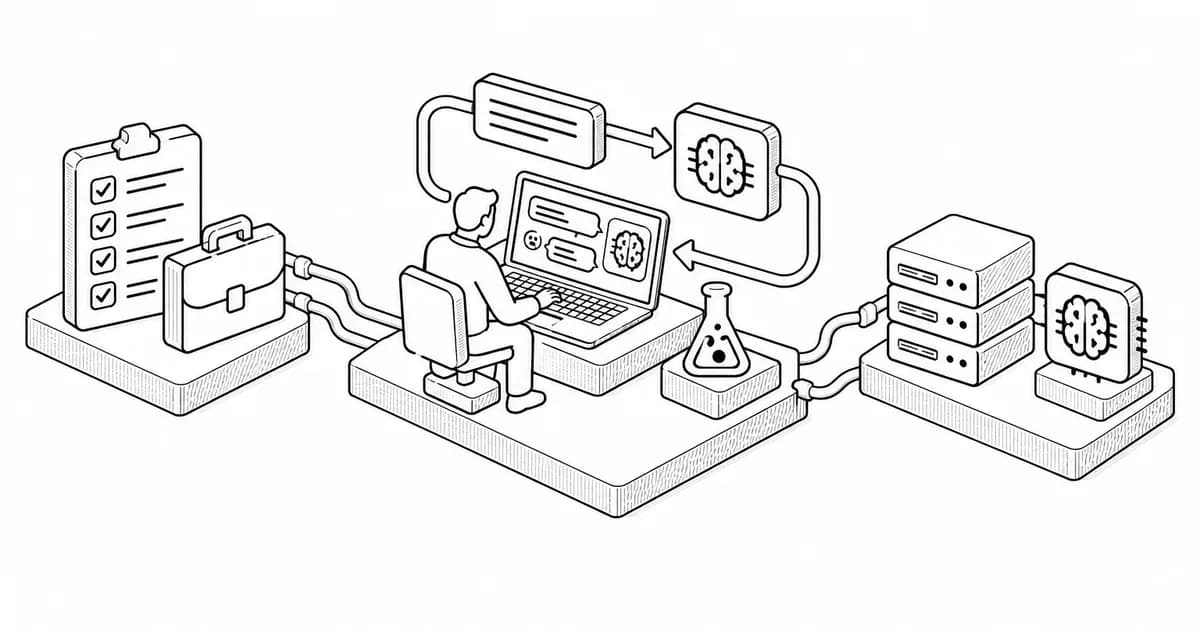
A prompt engineer is the person who makes an AI system do a job reliably. That means writing the instructions, the system prompts, the templates and the examples a model runs on; testing them against real inputs; measuring where they fail; and fixing them without breaking what worked. In a product team the role sits between the engineer who builds the pipeline and the expert who knows what a good output is. In a smaller company it is often one person doing all three.
The title covers three different jobs, and a prompt engineer course that fits one may be wrong for another. Before choosing a course, decide which of the three you are aiming at.
Three jobs behind one title
The prompt writer builds and maintains prompt libraries for a team: the support assistant's replies, the marketing team's templates, the internal tools people use daily. The work is writing, testing on real cases and documenting. Skills: clear writing, systematic testing, domain knowledge of the team's work. No code required, though a spreadsheet and a test set are.
The LLM engineer designs the prompts inside an application: the system prompt, the retrieval, the tool definitions, the evaluation harness, the guardrails. This is a software role with prompting as one of its parts. Skills: Python or TypeScript, an understanding of how models fail, evaluation design, some data work. This is where the highest salaries under the title are.
The trainer or consultant teaches teams to use the tools well and sets the standards. Skills: teaching, prompt craft across many tasks, the ability to turn one team's results into a method another team can follow.
What the work looks like day to day
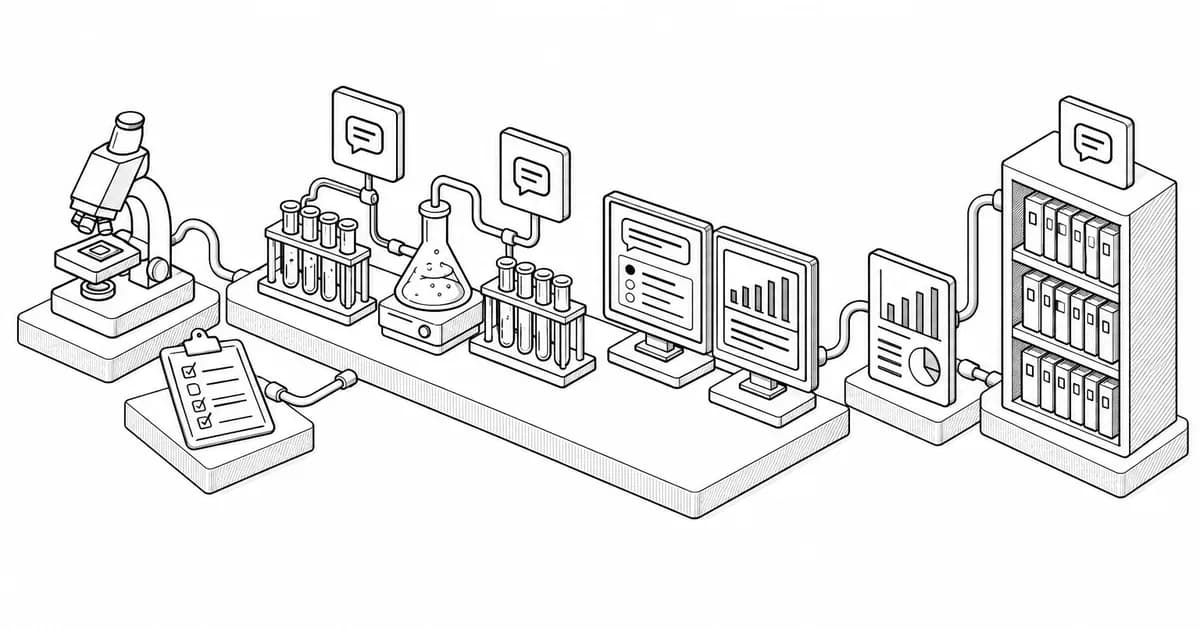
Whichever job, the week has the same shape. Collect the cases where the model got it wrong. Write a description of a correct output. Change one thing in the prompt. Run the test set, compare the results with the last version, write down what changed and ship the better one. The craft is in the test set and the measurement as much as in the prompt text; a prompt engineer who cannot show that a change helped is guessing with a title.
The second part of the week is reading: model release notes, because a prompt tuned for one version often needs a change for the next; and the team's own logs, because the inputs people actually send are never the inputs the prompt was designed for.
The skills, in the order to learn them
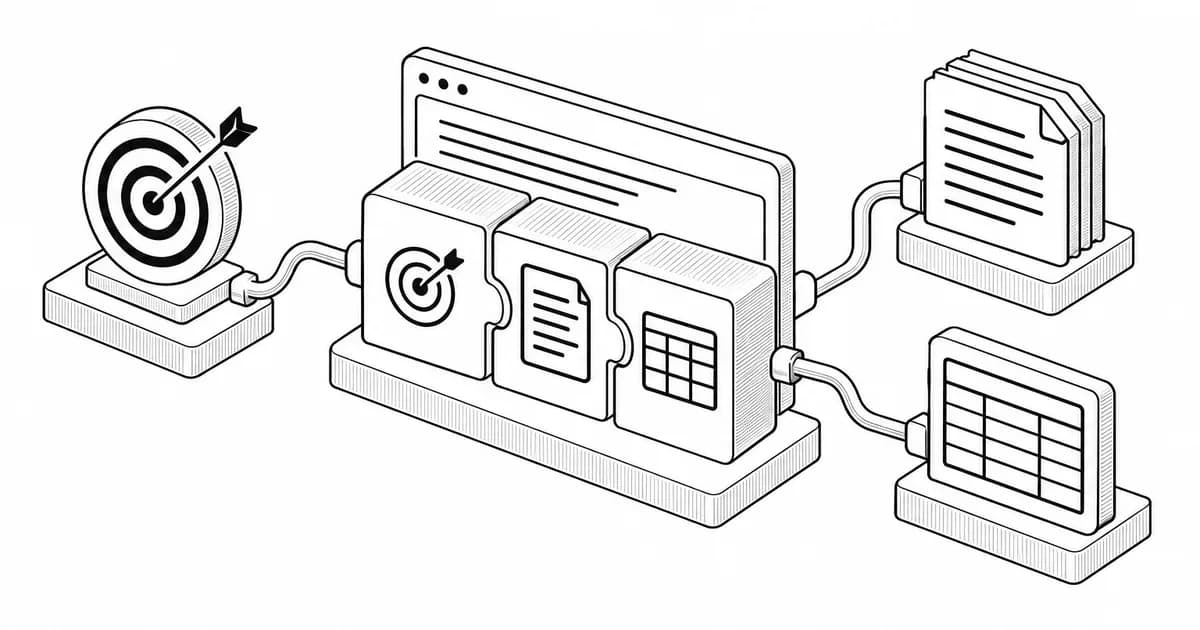
- Prompt structure. Role, task, context, rules, format, and why the order matters. Learn by editing working prompts rather than writing from blank; the prompt library is a corpus of tested examples for this.
- Testing. Build a set of five to ten varied inputs for a task, score the outputs against a written standard, change one thing, score again. This single habit separates a prompt engineer from someone who writes prompts.
- Model behaviour. How context length, instruction order, examples and temperature change output. How each major model differs. Why models hallucinate and which prompt choices reduce it.
- Techniques. Zero-shot, few-shot, chain of thought, plan-and-execute, self-check, structured output. Each is a tool for a failure mode, learned best by meeting the failure first.
- Evaluation at scale. Automated checks for format and content, model-graded evaluation and its limits, human review sampling. This is where the LLM engineer path separates from the writer path.
- Systems. Retrieval, tools and agents, where prompts become part of a program. Security of prompts and data. Cost and latency as design constraints.
- Communication. Writing the prompt documentation and the test results so a teammate can continue the work. Most prompt work is handed over eventually.
A prompt engineer course path
You can learn the whole list without paying anything, and a paid course buys structure and a certificate rather than knowledge that is unavailable elsewhere. The path below is ordered by skill, with a free option first at each step.
- Foundations (free): the official prompting guides from OpenAI, Anthropic and Google cover structure and model behaviour better than most courses, because they are written by the people who built the models and updated when the models change. Read all three; the differences between them are the lesson.
- Structured course (free): a university course on prompt engineering for ChatGPT, offered through the large course platforms, gives the techniques in order with exercises. Our roundup of free AI courses compares the current options.
- Practice (free): pick ten tasks from your own work, build a test set for each and optimise a prompt for each using the method in our prompt optimization guide. Keep the results. This is the portfolio employers ask for, and most candidates do not have one.
- Engineering (free to modest): for the LLM engineer path, the short courses from the model providers on building with their APIs, followed by one small project that uses retrieval and one that uses tools, with an evaluation harness for each.
- Certificate (paid): if a certificate matters for your situation, a provider or university certificate carries more weight than a bootcamp's. Check what the assessment actually tests; a certificate for watching videos tells an employer nothing.
What employers check
Job posts under the title vary, but interviews converge on three things. Can you show a prompt you improved, with the before, the after and the measurement? Can you explain why a model failed on a given input and what you would try first? Can you write clearly, because the prompt is a piece of writing and so is the documentation? A portfolio of three worked cases answers all three. A course certificate answers none of them on its own.
Our piece on the prompt engineer job and its salaries covers the market side: who hires, what they pay and how the three jobs differ in demand. If you want the techniques in one place, the prompt engineering guide is the long version of step four above.
Is it a lasting career?
The title may not last; the work will. Models get better at understanding loose instructions, and the share of the job that is wording shrinks. The share that is testing, evaluation, system design and knowing what a good output looks like grows. People who learned the craft as "write clever prompts" are finding less demand. People who learned it as "make an AI system reliable and prove it" are finding more, often under titles like AI product engineer or applied AI lead. Learn the second version from the start.