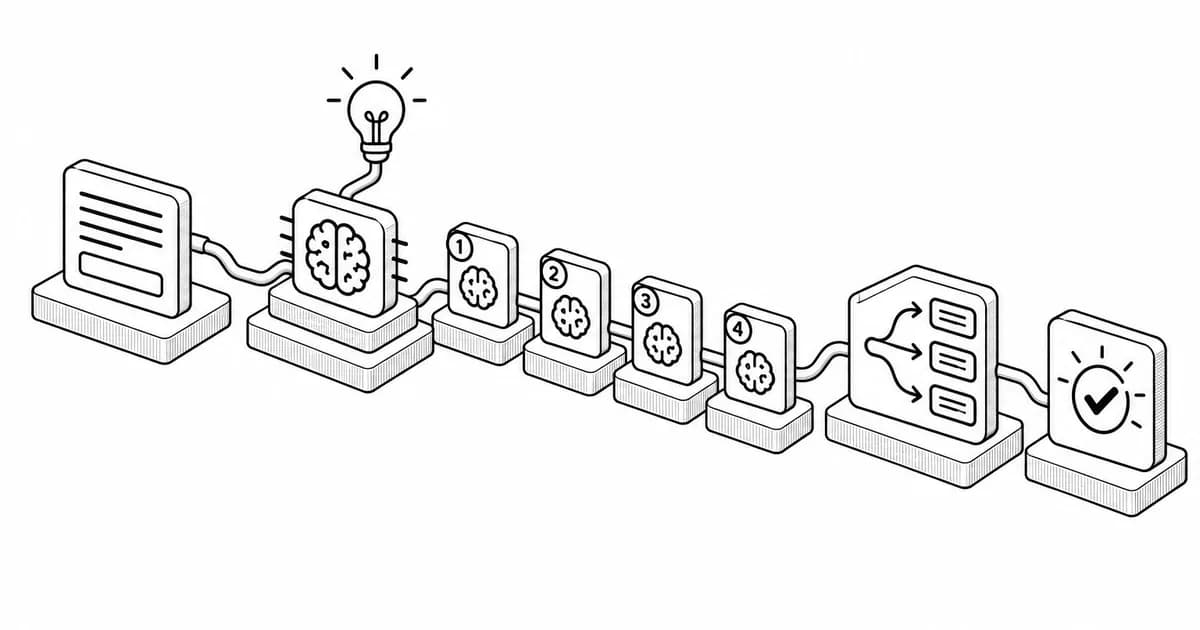
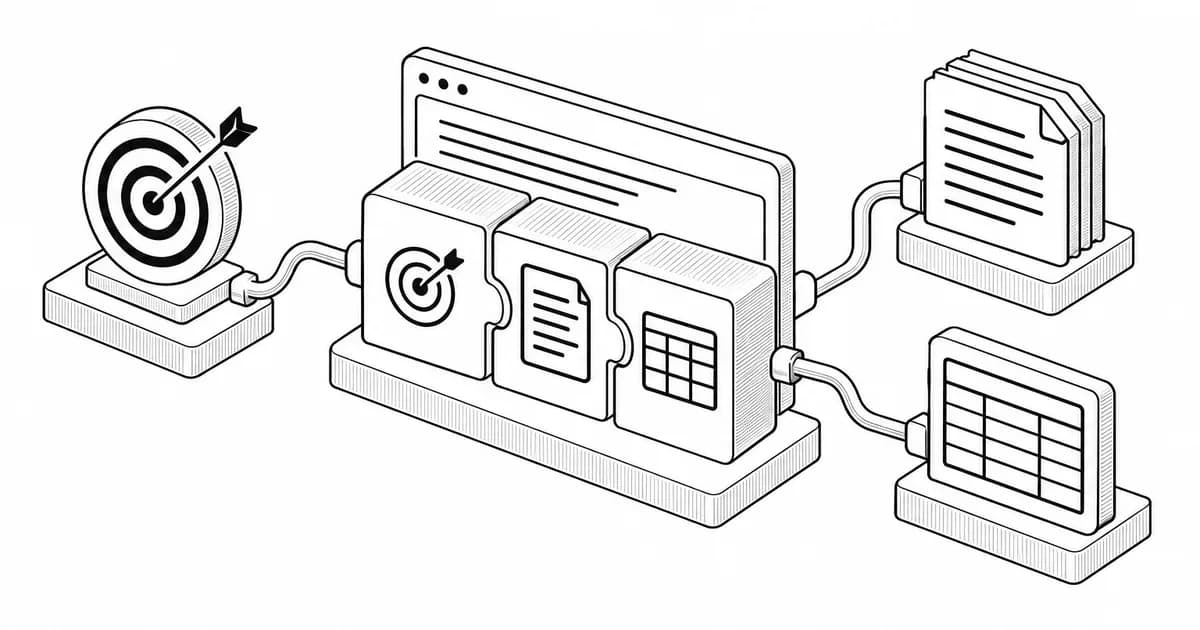
A smart prompt is one that makes the model do something before it answers: lay out a plan, list what it does not know, check its own first draft, or ask you a question. The answer that follows is better because the model spent its first effort on the shape of the problem rather than on the first sentence. The twenty prompts below use five of those patterns across the tasks people bring to ChatGPT, Claude and Gemini every day. Each is ready to paste; the brackets are yours to fill.
The five patterns
- Plan first: "Before you answer, list the steps you will take." You see the misunderstanding in the plan, where it costs one line.
- Name the unknowns: "List what you would need to know to answer well and mark each as known or assumed." The answer stops hiding its guesses.
- Check your work: "After the answer, review it against the rules and fix what fails." A second pass by the same model catches a surprising share of the first pass's errors.
- Ask before writing: "Ask me up to three questions that would change the answer, then wait." The cheapest way to avoid a wrong first draft on anything long.
- Argue the other side: "Give the strongest case against your own recommendation." The model's confidence drops to where it should be.
Smart prompts for decisions
I am deciding between [option A] and [option B] for [goal]. Before recommending, list the criteria a careful person would use, say which criteria I have not mentioned, and ask me to rank them. Then compare the options on my ranking and give the recommendation with its biggest risk.
Here is a decision I have already made: [decision]. Write the strongest case that it is wrong, in five points, each with what evidence would prove it. Then tell me which single point I should check before acting.
Run a pre-mortem. Assume it is one year later and [project] has failed. Write the three most likely reasons, as a story each, then the one thing I could do this week to prevent the most likely one.
I have to choose by [date]. List what I know, what I assume and what I could find out in a day. For each assumption, say what changes if it is wrong.
Smart prompts for writing
I need to write [piece] for [audience]. Before drafting, ask me up to three questions whose answers would change the piece. Wait for my answers. Then give me an outline, and only after I approve it, the draft.
Here is my draft: [paste]. Do not rewrite it. List the five sentences a careful editor would cut or change, with the reason for each. Then list anything a reader would need that is missing.
Write [piece]. Then, in a separate section, review your own draft against these rules: [rules]. Quote each sentence that breaks a rule and give the fixed version. Finish with the corrected draft.
Summarise this text in 120 words: [paste]. Before the summary, list the three claims in the text you are least sure you understood, with the sentence each comes from.
Smart prompts for analysis
Here is some data: [paste]. Before analysing, say what the columns appear to mean and what question you think I am asking. If you are unsure, ask. Then give three findings, each with the evidence and the caveat.
Explain [concept] to me. First ask what I already know about it and what I will use it for. Then explain at that level, and end with one question to check I understood.
I think [claim]. Steelman it in three sentences, then give the two strongest objections, then tell me what observation would settle it either way.
Read this argument: [paste]. List its assumptions, including the ones it does not state. Mark each as reasonable, questionable or false, with one line of reasoning each.
Smart prompts for code and technical work
Here is a bug: [error, code, what I expected]. Before proposing a fix, list the three most likely causes in order and the one thing to check for each. Wait for my result. Then fix the cause, not the symptom, and give a test that fails before and passes after.
Plan this feature before writing any code: [feature]. List the files you would touch, the order, the risks and the questions you have. Stop after the plan.
Review this code as a skeptical senior engineer: [paste]. Verify each finding against the code before reporting it. Rank by severity. Say what you are unsure about.
Write a function that [spec]. First list the edge cases, including empty, very large and bad input. Then write the function and a test for every edge case you listed.
Smart prompts for work and planning
Here is my week: [calendar and tasks]. Before planning, tell me what you think my three priorities are and ask if that is right. Then build the week around them, with the hard task first each day and slack on Friday.
I run [business or team]. Ask me five questions a good consultant would ask in the first meeting. After my answers, give me the one change you would make first and why.
Turn these meeting notes into actions: [paste]. For each action, name the owner from the notes or mark it unassigned. Do not invent an owner. List the decisions separately and quote the line each came from.
I want to [goal] by [date]. Work backwards: what has to be true the week before, the month before, and now? Then tell me which of those I have no control over.
How to make any prompt smarter
Take a prompt you already use and add one line from the five patterns at the top. The line goes at the end of the prompt, where the model weights it most. Plan first for anything with steps; name the unknowns for anything with facts; check your work for anything with rules; ask before writing for anything long; argue the other side for anything you have already decided. One line, one pattern. Two patterns in one prompt usually works; five produces a model that talks about the task instead of doing it.
The prompts in our prompt library use these patterns where the task needs them, and the decision making and brainstorming subcategories are built almost entirely from them. If you want the model to write the smart version of a prompt for you, the meta prompting guide shows the one-line way.