
On this page
- The Five Slots Behind Every Prompt Here
- Portrait Prompts (1 to 7)
- 1. Natural window-light headshot
- 2. Corporate headshot on white
- 3. Golden hour outdoor portrait
- 4. Low-key moody portrait
- 5. Candid lifestyle portrait
- 6. Black and white editorial portrait
- 7. Environmental portrait at work
- Editing Prompts (8 to 15)
- 8. Swap the background cleanly
- 9. Kill harsh midday light
- 10. Restore a damaged photograph
- 11. Colorize black and white
- 12. Change the time of day
- 13. Remove an object without a trace
- 14. Upscale and recover detail
- 15. Match two photos to one look
- Product and Commercial Prompts (16 to 22)
- 16. Clean e-commerce shot
- 17. Product in lifestyle context
- 18. Flat-lay arrangement
- 19. Dramatic hero shot
- 20. Scale reference
- 21. Packaging mockup
- 22. Before and after pair
- Creative and Stylized Prompts (23 to 30)
- 23. Cinematic still frame
- 24. Double exposure
- 25. Minimalist composition
- 26. Macro texture study
- 27. Long exposure motion
- 28. Retro film look
- 29. Architectural photography
- 30. Concept illustration from a photo
- The Trending Ones People Actually Search For
- 31. Childhood photo recreation
- 32. Couple portrait from two separate photos
- 33. Traditional outfit portrait
- 34. Studio glamour retouch
- Why Gemini Changes Your Face
- Five Things That Fix Most Bad Results
- Frequently Asked Questions
- How do I prompt Gemini for an image?
- What's the difference between editing and generating?
- Why do my Gemini photos look fake?
- Can Gemini keep the same face across several images?
- What aspect ratio should I ask for?
- Do these work in other image models?
- Your Move
A lot of the Gemini photo prompts floating around are one line long. "Make this photo look professional." Then people wonder why everything comes back looking like a stock image of nobody in particular.
It isn't the model. It's the input.
Gemini holds structure well. Give it a subject, a light direction, a lens, a mood and an aspect ratio, and it'll keep all five in the same frame. Leave one out and it fills the gap with an average of everything it has ever seen, which is exactly the flat, evenly lit, faintly plastic look that makes people give up and go back to a phone filter.
Below are 34 prompts, sorted by what you're actually trying to do. All copy-paste ready. After them there's the five-slot pattern they share, so you can stop collecting lists and write your own.
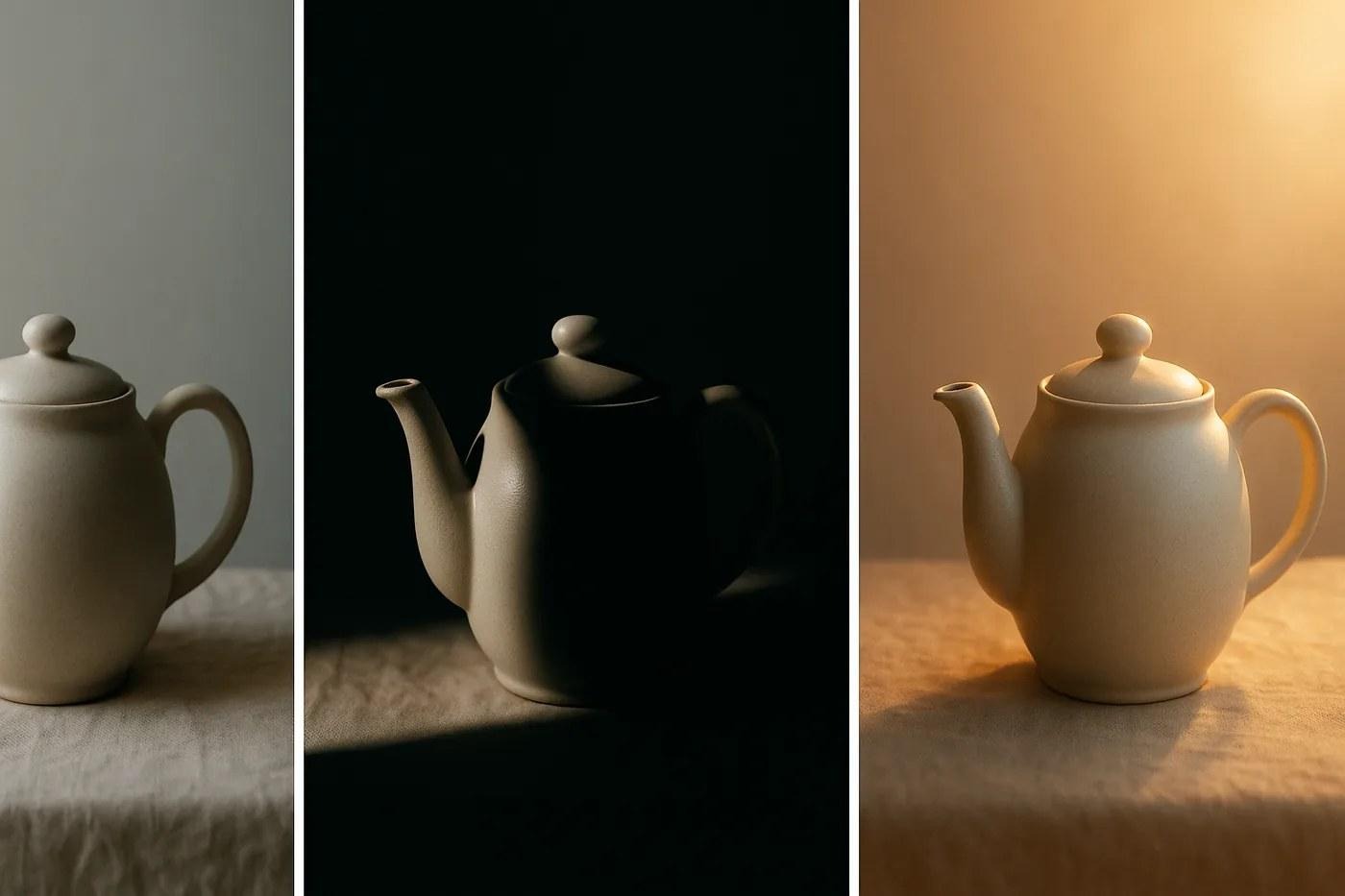
Same object, same lens, three light descriptions. Nothing else in the prompt changed. The lighting line does more for realism than any other part of it.
The Five Slots Behind Every Prompt Here
Slot | What it controls | Example |
Subject | who or what, specifically | "a 35-year-old woman with short curly hair" |
Action | what's happening right now | "looking off-camera, mid-laugh" |
Light | the single biggest lever on realism | "soft window light from the left, no fill" |
Lens | depth of field and compression | "85mm at f/1.8, shallow depth of field" |
Finish | color and grain | "warm tones, fine grain, no HDR" |
Skip the light line and you get flat images. Skip the lens line and everything arrives at the same middle distance, framed like a passport photo. When a prompt below doesn't land, the fix is almost never more adjectives. It's one slot made sharper.
One more distinction before the list. Editing and generating aren't the same job. When you upload a photo, the picture already supplies the subject, so describe only what should change and say plainly what must stay. When you start from nothing, every slot matters, because anything you leave blank gets filled with an average.
Portrait Prompts (1 to 7)
All seven generate from scratch. To fix a photo you already have, skip to prompts 8 to 15.
1. Natural window-light headshot
A professional headshot of [describe person: age, hair, clothing], chest up, facing camera with a relaxed half-smile. Soft natural window light from the left, gentle falloff into shadow on the right cheek, no artificial fill. 85mm lens at f/1.8, shallow depth of field, background softly blurred neutral gray. Warm natural skin tones, fine grain, photorealistic, no retouching gloss.
2. Corporate headshot on white
A corporate headshot of [describe person], shoulders square to camera, direct eye contact, neutral closed-mouth expression. Clean white seamless background, large softbox key at 45 degrees, subtle rim light separating hair from background. 100mm lens at f/4, face sharp throughout. Neutral grade, crisp but natural skin texture.
3. Golden hour outdoor portrait
An outdoor portrait of [describe person] at golden hour, backlit by low sun making a warm rim around the hair, face lifted by soft light reflected from below. Shallow depth of field, warm bokeh from distant foliage. 135mm lens at f/2, compressed background. Golden tones, slight haze, photorealistic, no lens flare artifacts.
4. Low-key moody portrait
A low-key portrait of [describe person] against charcoal, lit by one hard source from the upper right, two-thirds of the face left in shadow. Deep contrast, single catchlight in the visible eye. 85mm at f/2.8. Desaturated color, rich blacks, cinematic. No fill light at all.
5. Candid lifestyle portrait
A candid photograph of [describe person] in [setting], caught mid-action rather than posed, attention directed away from the camera. Available light only, mixed color temperature. 35mm at f/2, environment visible and contextual. Slightly imperfect framing, as if grabbed quickly. Natural color, documentary feel.
6. Black and white editorial portrait
A black and white editorial portrait of [describe person], three-quarter angle, serious expression, jawline lit by one large source to the left. High contrast with a full tonal range from pure black to clean white. 85mm at f/2.8. Fine grain, deep shadows that still hold detail, no color whatsoever.
7. Environmental portrait at work
An environmental portrait of [describe person] in their workspace, surrounded by the tools of their trade, hands occupied by the work, eyes on the camera. Mixed practical lighting from the room plus soft window light. 24mm at f/4, wide enough to show context, subject placed off-center. Natural color, lived-in atmosphere.
Portraits are where people usually start, and where the light line does most of the work. Worth trying prompt 1 and prompt 4 back to back on the same description. Same person, same lens, completely different photograph.
Editing Prompts (8 to 15)
These assume a photo is already uploaded. Describe the change. Don't re-describe the picture.
8. Swap the background cleanly
Keep the subject exactly as is: same pose, same light on the face, same edges around the hair. Replace only the background with softly blurred neutral studio gray. Match the new background's light direction to the existing lighting on the subject so it reads as one photograph, not a cut-out.
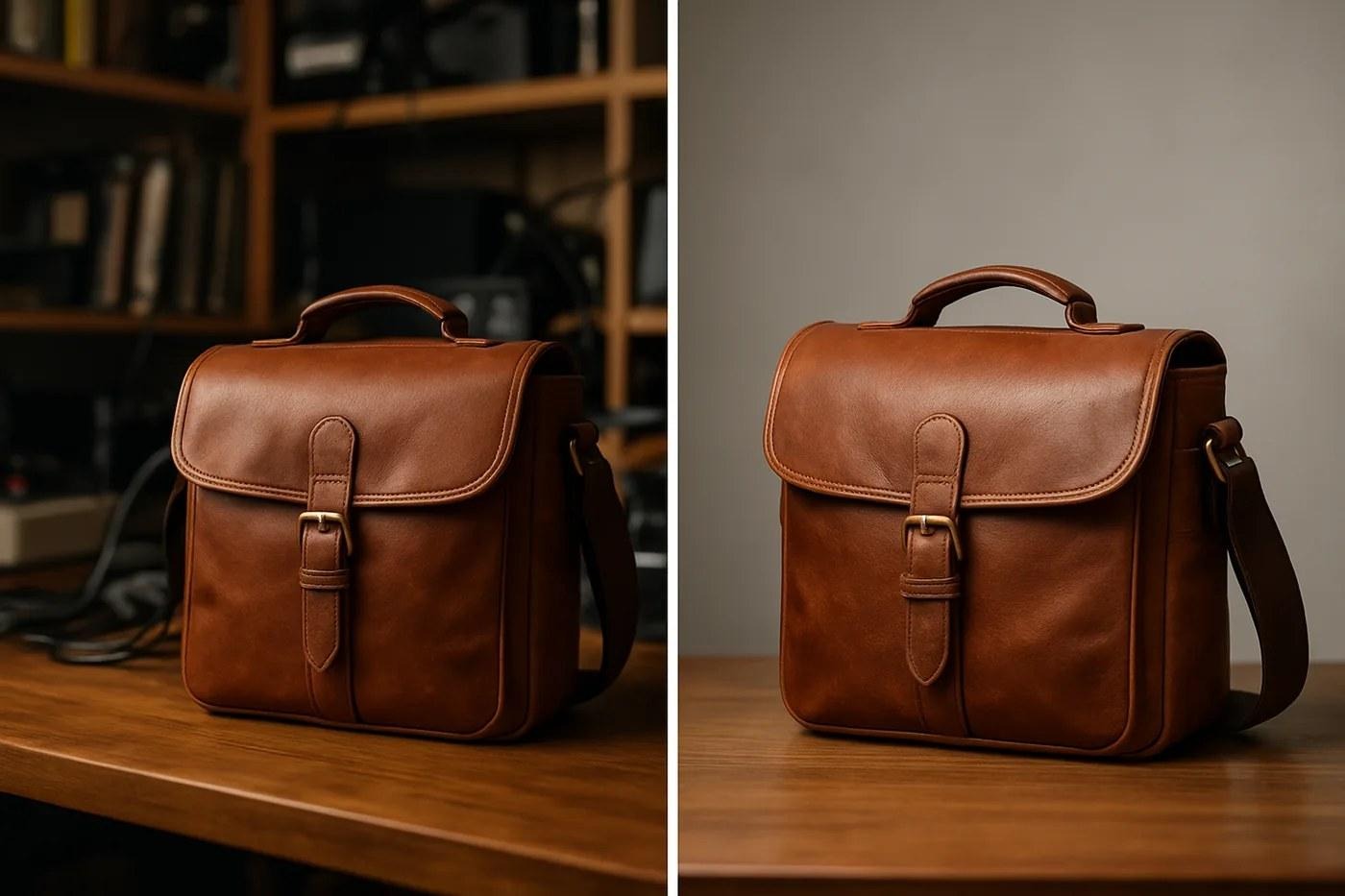
Prompt 8. Same object, same light on it. Only the background moved.
9. Kill harsh midday light
Soften the harsh overhead light in this photo. Lift the shadows under the eyes, nose and chin without flattening the face. Pull down the specular highlights on forehead and cheeks. Keep skin texture intact, do not smooth or blur skin. Result should look shot in open shade, not direct sun.
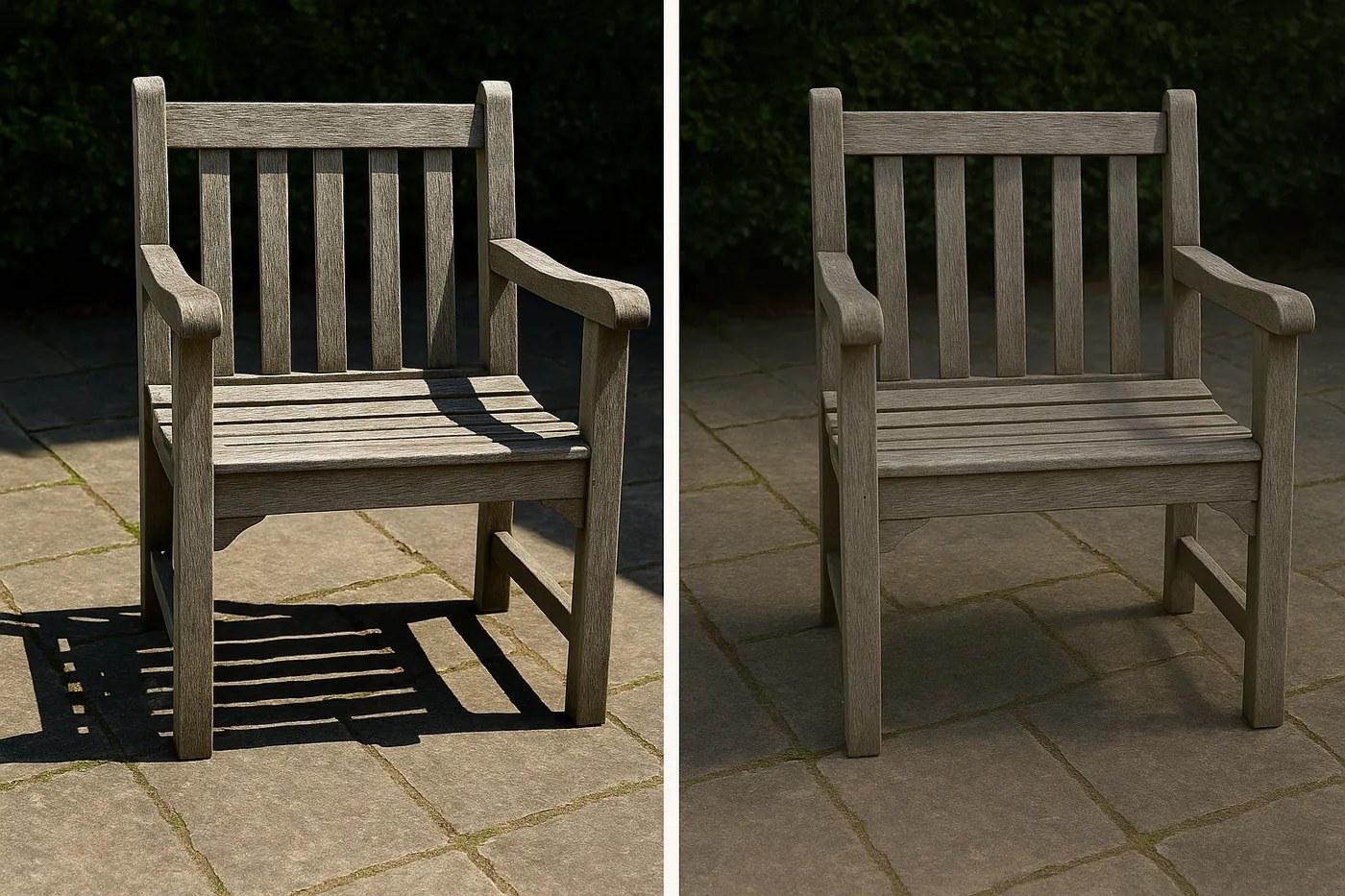
Prompt 9. Shadows opened up, highlights pulled down, wood grain still visible. The clause about keeping texture is the one people leave out.
10. Restore a damaged photograph
Restore this old photograph. Repair scratches, creases, dust and torn edges. Recover detail in faded areas without inventing facial features that aren't there. Keep the original grain structure and the period tonality. Don't modernize it, don't sharpen aggressively, don't add color.
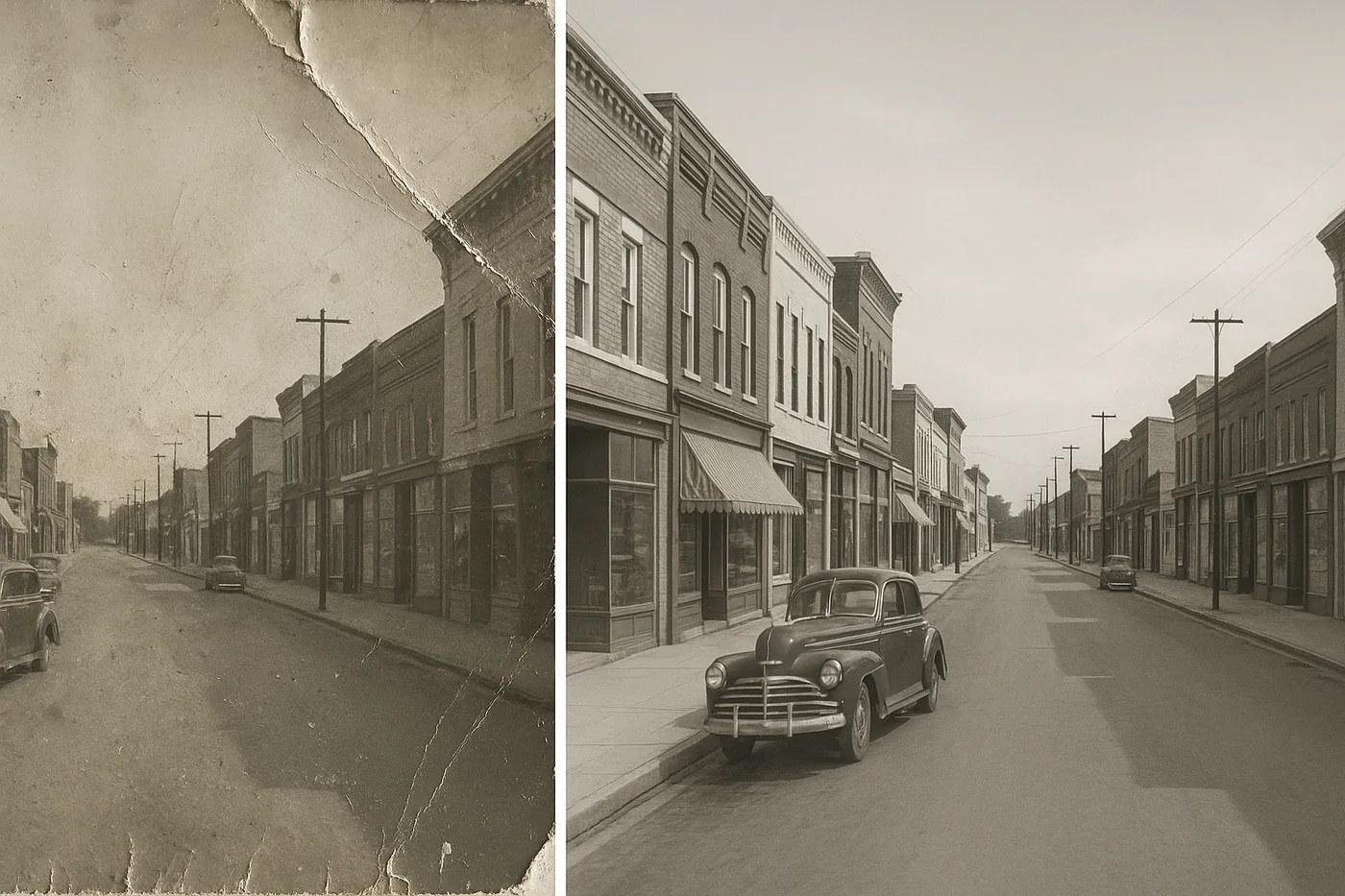
Prompt 10. Scratches and creases repaired, period grain and tonality kept.
11. Colorize black and white
Colorize this black and white photograph with restrained, period-accurate color. Muted natural tones, not saturated ones. Skin should read as skin, not as tint. Leave the original contrast and grain untouched. Where you're uncertain about an object's color, pick the most probable neutral rather than guessing boldly.
12. Change the time of day
Change the lighting from [current] to [target: late golden hour]. Redirect the shadows to match a low sun from the [left/right]. Warm the highlights, cool the shadows slightly, add gentle atmospheric haze in the distance. Subject, composition and focal length stay exactly as they are.
13. Remove an object without a trace
Remove [object]. Reconstruct what would realistically sit behind it, matching surrounding texture, pattern continuity, light direction and grain. No blurred patch, no smoothed area where the object used to be.
14. Upscale and recover detail
Increase resolution and recover fine detail in [area]. Sharpen edges that already exist rather than inventing new ones. Keep noise characteristics consistent across the whole frame. Don't add texture that wasn't there. No sharpening halos around high-contrast edges.
15. Match two photos to one look
Grade this photo to match the color, contrast and tonality of the reference image I'm giving you. Match the black point, the highlight roll-off and the color cast sitting in the shadows. Composition, crop and subject stay untouched.
Prompt 10 is the one people underestimate. Restoration works far better than expected, right up until you ask it to recover a face that's genuinely gone, at which point it'll happily invent one. The clause about not inventing features is doing real work there.
Product and Commercial Prompts (16 to 22)
Swap [product] for the real object, material and color included. "A mug" and "a matte black ceramic mug" come back as two different photographs.
16. Clean e-commerce shot
A product photograph of [product] on pure white seamless, centered, slight three-quarter angle showing the front face and one side. Even diffused light from two large softboxes, soft gradient shadow directly beneath for grounding. 100mm macro at f/8, product sharp front to back. Accurate color, no studio reflections, no props.

Prompt 16. Two softboxes, contact shadow, nothing else in frame.
17. Product in lifestyle context
A lifestyle photograph of [product] in [realistic setting], placed as if someone just set it down. Soft natural light from a window out of frame. 50mm at f/2.8, product sharp, background falling gently out of focus. Warm inviting palette, a few contextual objects, no clutter.
18. Flat-lay arrangement
An overhead flat-lay of [products] on [surface], shot dead-on at 90 degrees. Even soft light, minimal shadows. Balanced negative space between objects, aligned to an invisible grid. 35mm at f/5.6. Muted background tone, high color accuracy. Styled, not crowded.
19. Dramatic hero shot
A hero shot of [product] on a dark reflective surface, lit by one hard source above and behind, making a strong rim highlight along the top edge. Deep shadow filling the foreground. 85mm at f/5.6. Rich contrast, controlled reflections, premium advertising look.
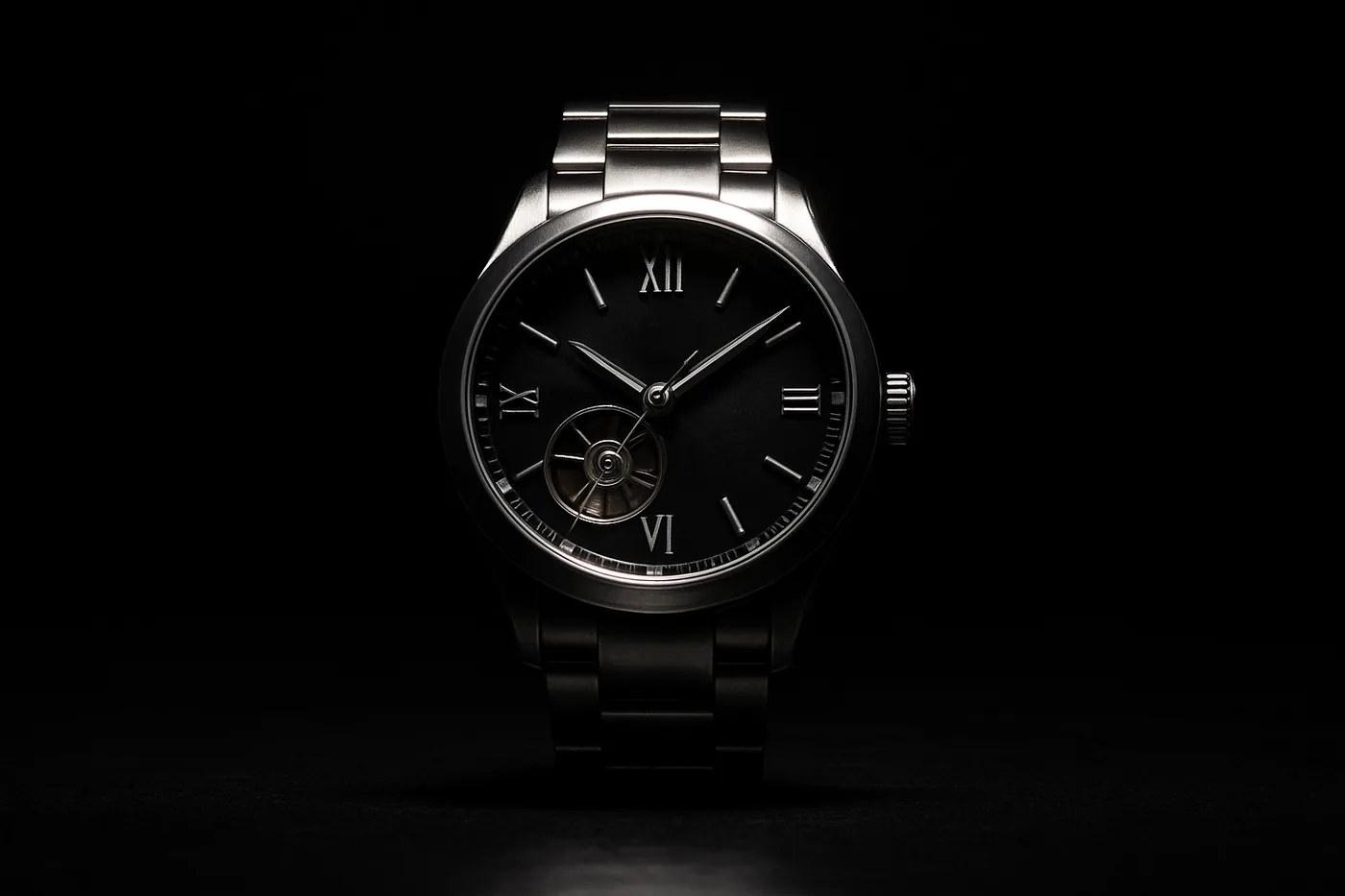
Prompt 19. One light, deep foreground shadow, controlled reflection.
20. Scale reference
[Product] held in a human hand to show real scale. Natural skin tones, product sharp, hand slightly softer. Clean neutral background. 50mm at f/4, framed so the product sits in the central third. Even daylight-balanced light.
21. Packaging mockup
A photorealistic mockup of [packaging type] standing on light gray with a subtle contact shadow. Front face clearly visible and undistorted for artwork placement. Soft studio light from upper left, gentle highlight down the left edge. 85mm at f/8. Neutral color, nothing competing in the background.
22. Before and after pair
Two images side by side of the same [subject], identical framing, identical light, identical camera position. Left shows [state A], right shows [state B]. The only difference between the frames is [the variable]. Neutral background, even light, no cues that they were shot at different times.
If you sell anything physical, 16 and 22 pay for themselves the first week. The rest are nice. Those two replace a shoot.
Creative and Stylized Prompts (23 to 30)
These leave realism behind on purpose, so the finish slot carries more of the result than the light slot does.
23. Cinematic still frame
A cinematic film still of [scene], framed 2.39:1. Anamorphic lens character with horizontal flare and oval bokeh. Motivated practical lighting inside the scene itself. Teal and orange grade held subtly, not pushed. Shallow depth of field, slight grain, no text or credits.
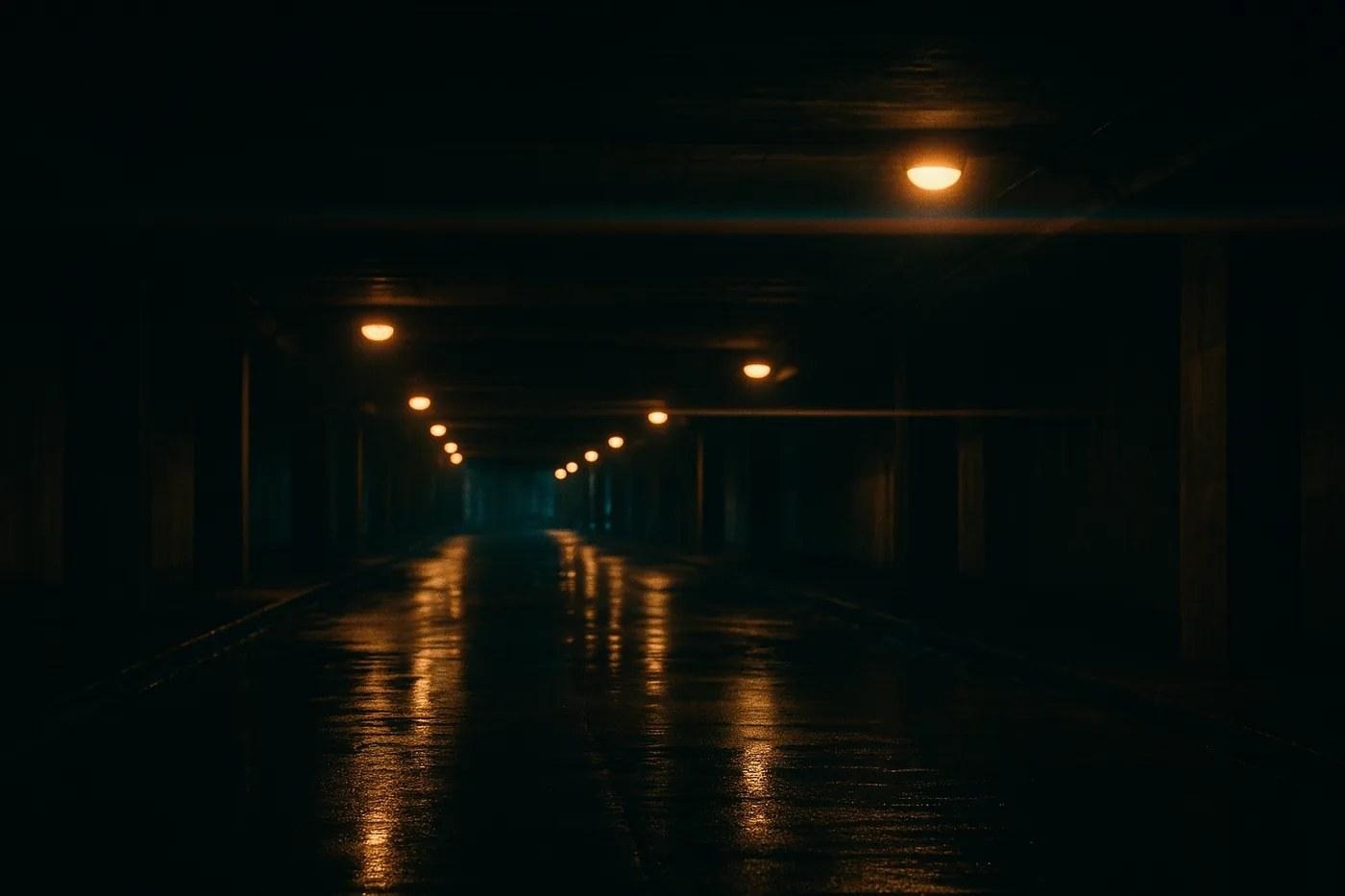
Prompt 23. Practical lights inside the scene, grade held back rather than pushed.
24. Double exposure
A double exposure combining [subject silhouette] with [texture or scene] filling the interior of the silhouette. High contrast between the two exposures. Clean edges where silhouette meets background. Monochrome with one accent tone. Artistic, not photorealistic.
25. Minimalist composition
A minimalist photograph of [single subject] against a large expanse of [flat color] negative space, subject at the lower right third. Soft even light, no visible shadow direction. Palette limited to three tones. 50mm at f/5.6. Calm, uncluttered, gallery-print quality.
26. Macro texture study
An extreme macro of [surface] filling the entire frame, showing texture invisible at normal distance. Raking side light to emphasize relief. 100mm macro at f/11, focus stacked for edge-to-edge sharpness. Neutral color, abstract composition.
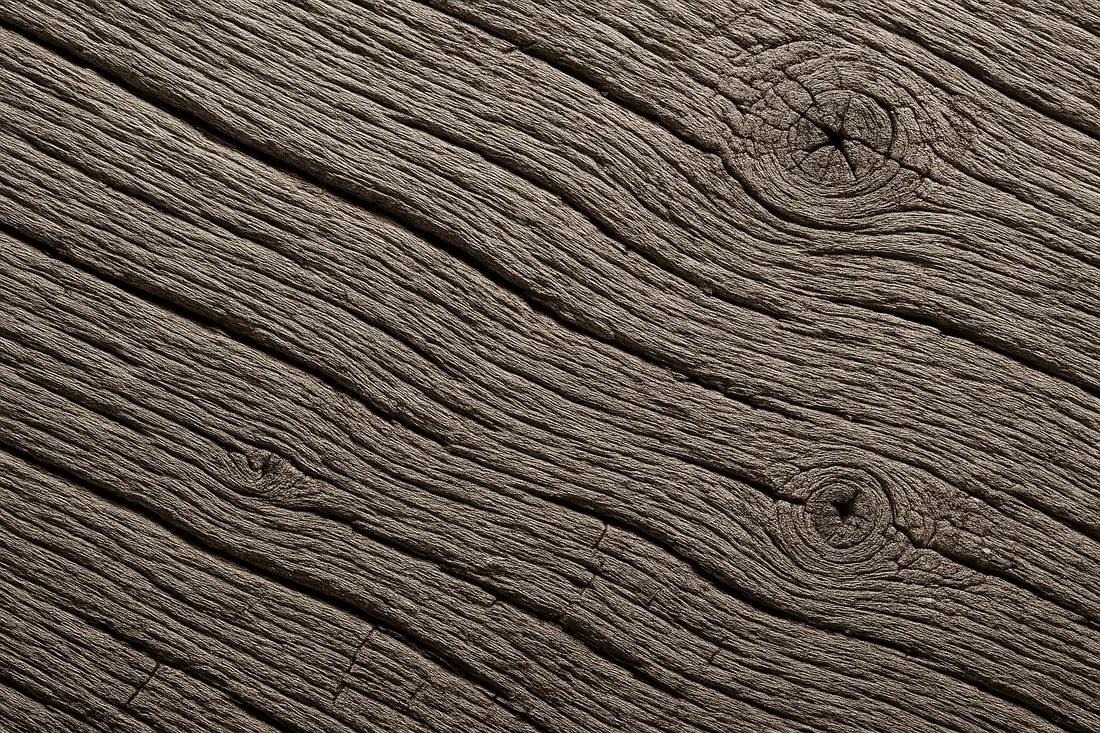
Prompt 26. Raking side light is what makes the relief readable.
27. Long exposure motion
A long exposure of [scene] where [moving element] blurs into smooth motion while [static element] stays razor sharp. Tripod-stable framing, 15-second exposure. Cool blue hour temperature. 24mm at f/11, deep focus throughout.
28. Retro film look
[Subject], made to look shot on 35mm film in the late 1980s. Slightly faded blacks, warm shift toward magenta in the highlights, visible grain, minor halation around bright areas. No date stamp. 35mm at f/2.8, slightly soft corners, imperfect focus the way a consumer camera produced it.
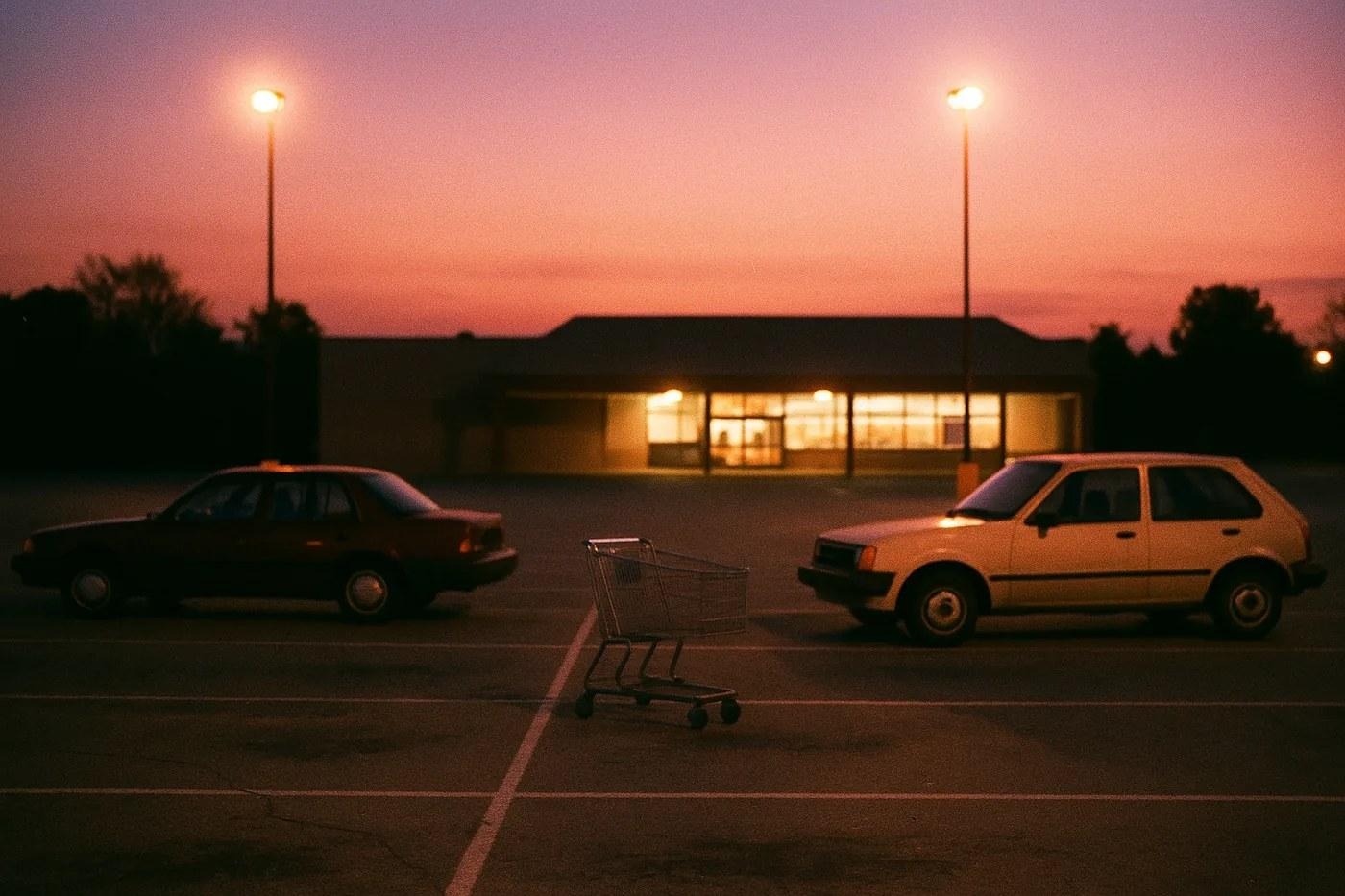
Prompt 28. Faded blacks, magenta shift in the highlights, halation around the lamp posts.
29. Architectural photography
An architectural photograph of [building or interior], all vertical lines kept vertical, no keystone distortion. Blue hour with interior lights on, balancing ambient against artificial. 24mm tilt-shift at f/8. Clean symmetrical composition, neutral white balance, nobody in frame.
30. Concept illustration from a photo
Turn this photograph into a clean technical illustration: black line art on white, consistent line weight, light hatching on side planes only. Keep the exact proportions and perspective of the original. Strip all color, texture and background detail. Structure only.
The Trending Ones People Actually Search For
Worth saying out loud: plenty of Gemini photo searches aren't about lighting theory. They're about one specific look somebody saw on a feed that week, and the same handful keeps coming back.
31. Childhood photo recreation
Recreate this photo as if it were taken in the early 1990s on consumer film. Keep the face exactly as it is, do not alter facial structure or proportions. Change only the era: film grain, slightly faded color, warm cast, soft focus at the edges, period-appropriate clothing and background. The person must remain recognizably themselves.
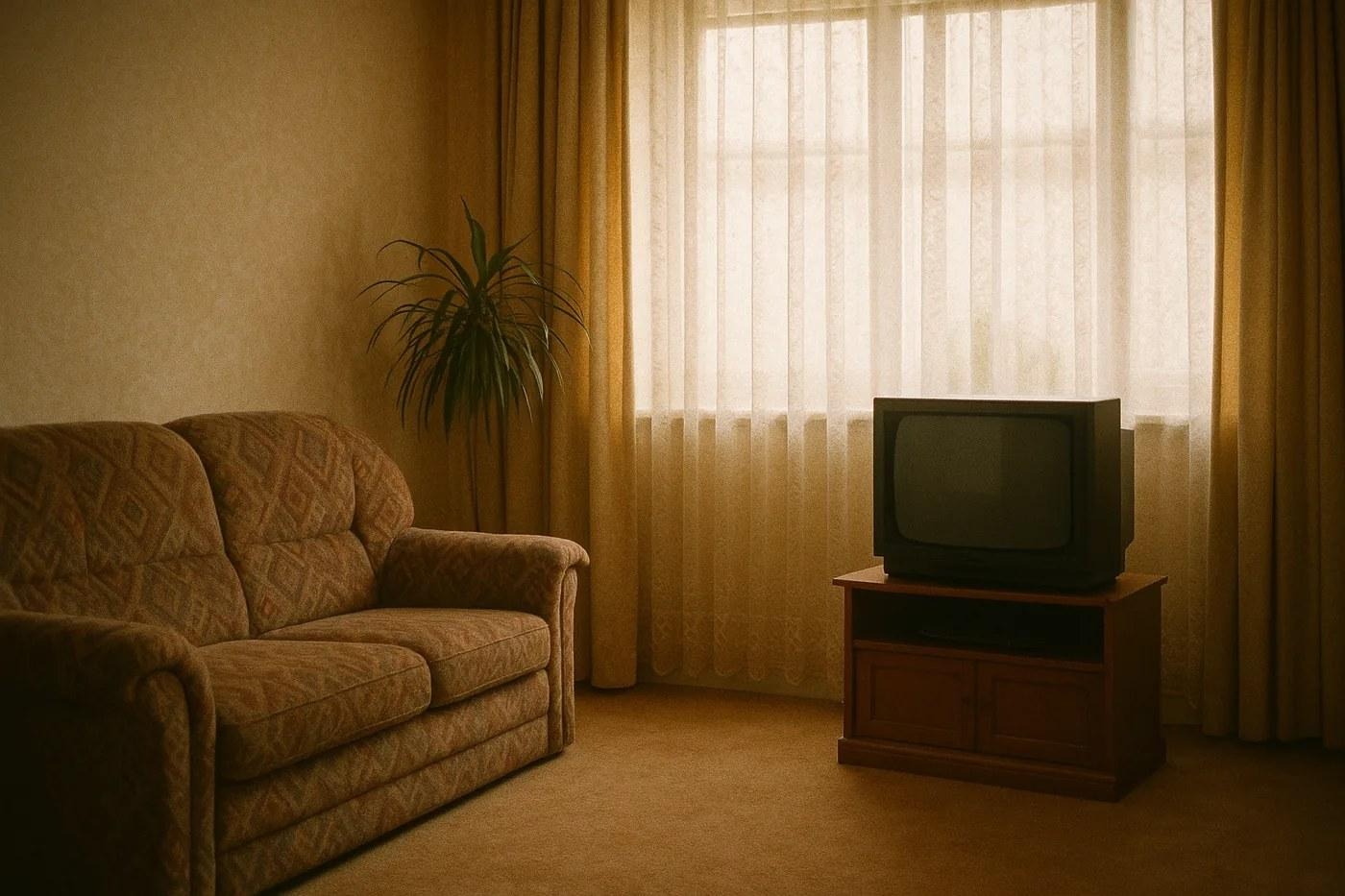
Prompt 31 applied to a room rather than a person. The era markers are doing the work: grain, faded color, warm cast, soft edges.
32. Couple portrait from two separate photos
Combine the two uploaded photos into one portrait of both people standing together, matched lighting and color temperature across both faces. Preserve each face exactly as uploaded, including skin tone and proportions. Neutral studio background, soft even light, 85mm at f/2.8. No blending or morphing of features between the two people.
33. Traditional outfit portrait
Show the person from the uploaded photo wearing [traditional garment], full-length framing, standing naturally. Keep the face unchanged in structure, expression and skin tone. Fabric should drape realistically with visible texture and weight. Soft natural light, simple uncluttered background, 50mm at f/2.8.
34. Studio glamour retouch
Retouch this portrait to magazine standard while keeping the person recognizable. Even the skin tone, reduce shine on the forehead and nose, brighten the eyes slightly. Do not reshape the face, jaw, nose or body. Do not remove moles, scars or freckles. Skin must keep visible pores and texture.
Notice what those four have in common. Every one of them contains a clause protecting the face, because that's the single most common complaint about this model, and it's the next section.
Why Gemini Changes Your Face
You upload a photo, ask for an edit, and the person who comes back isn't quite you. Slightly different nose. Younger. Smoother.
That's the model re-generating the face instead of editing it, and it happens because nothing in your prompt told it not to.
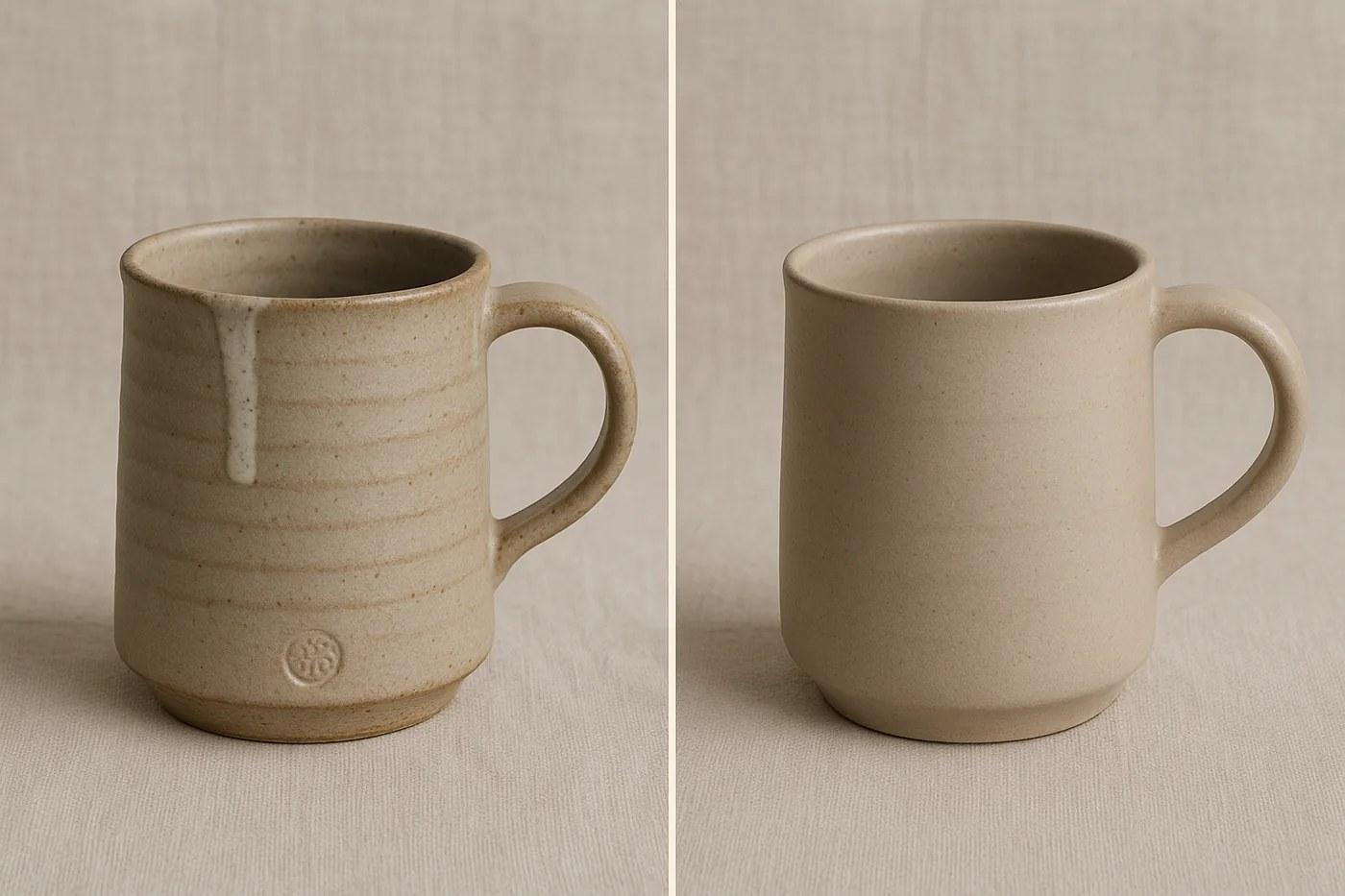
Easier to see on an object than on a face, and it's the same mechanism. Without a protection clause the model removes exactly the details that made the thing real: the chip, the uneven glaze, the throwing rings, the maker's mark.
Three fixes, in order of how much they help:
Protect the face explicitly. "Keep the face exactly as uploaded: same structure, same proportions, same skin tone." One sentence, and it does most of the work.
Ask for less per generation. A prompt that changes background, lighting, outfit and grade at once invites a rebuild. Split it: background first, then lighting on the result.
Say what not to remove. Models smooth aggressively by default. Moles, freckles, scars and laugh lines disappear unless you name them, and naming them is what keeps the photo looking like a photograph.
If the face still drifts after all three, the source image is usually the problem. Low resolution, heavy compression or a face occupying a small part of the frame all give the model less to preserve and more to invent.
Five Things That Fix Most Bad Results
Change one slot, not four. If a result is close but wrong, edit only the light line and run it again. Change three things at once and you learn nothing about which one mattered.
Say what to avoid. Negatives carry real weight here. "No HDR", "no lens flare", "don't smooth the skin": generic output usually comes from prompts that never said what to avoid.
"A woman" gives you an average. "A 35-year-old woman with short curly hair and reading glasses" gives you a person. Age plus one specific detail does most of the work.
Stop re-describing the photo. When you're editing, every sentence spent re-describing the photo is a sentence Gemini might read as an instruction to change it. Say what changes. Say what stays. Stop there.
Save the ones that land. Keep the output attached to the prompt. Rebuilding a prompt from memory three weeks later almost never produces the same picture, which is the most annoying way to lose good work.
Want the whole set organized instead of scattered across browser tabs? The Gemini prompt collection in our library is sorted by use case, and product photography prompts live next door for anyone shooting things rather than people.
Frequently Asked Questions
How do I prompt Gemini for an image?
Five things, in this order: subject, action, light, lens, finish. Every prompt on this page follows that shape.
What's the difference between editing and generating?
Upload a photo and Gemini already knows the subject, so you describe only the change and protect what should stay put. Generate from scratch and you supply every slot yourself. The mistake people make is prompting an edit as if it were a generation, re-describing the entire scene, which invites the model to rebuild parts you were happy with.
Why do my Gemini photos look fake?
Usually the light line. Real photographs have one dominant direction and visible falloff into shadow. Prompts that say nothing about light produce evenly lit images, and even lighting is the strongest single cue that a picture is synthetic. Add a direction and a quality, something like "soft window light from the left, no fill", and most of the plastic look disappears in one generation.
Can Gemini keep the same face across several images?
Not reliably from text alone. Upload a reference and work in editing mode instead, and add the protection clause: same structure, same proportions, same skin tone. Without it the model treats every generation as license to rebuild the face from scratch, which is why people end up with a slightly younger, slightly smoother stranger.
What aspect ratio should I ask for?
Say it explicitly or you'll get the default. 1:1 for square social, 4:5 for vertical feeds, 16:9 for covers, 2.39:1 for cinematic stills. Aspect ratio belongs in the prompt, because cropping afterwards throws away part of the composition you asked for.
Do these work in other image models?
The five-slot structure does. The specific wording doesn't always transfer, and ChatGPT image prompts need a slightly different shape, mostly because the two models weight lens language differently.
Your Move
Pick the one prompt that matches what's actually on your desk today. Run it unchanged. Then change exactly one slot and run it again.
Two generations will teach you more about how this model reads instructions than another twenty prompts copied from another list.
Put this into practice: browse Gemini prompts and portrait prompts in the God of Prompt library. Copy, paste, run.
Working across ChatGPT, Claude and Gemini at once? The Complete AI Bundle collects the tested sets for all three in one place, so you're not rebuilding this from scratch every time a model updates.
Prompts for this topic
Put this article to work with ready-to-use prompts from the God of Prompt library.
Keep reading

Can Claude Generate Images? What It Actually Does in 2026
Claude AI can’t generate images natively, but it can analyze them, create SVG visuals, and connect to image generators via MCP. Here’s what actually works.

Image to Prompt: Generate AI Prompts from Any Photo
Learn how to reverse-engineer AI prompts from existing images. Turn any photo into a detailed prompt you can use with Midjourney, DALL-E, or Stable Diffusion.
20 Sora 2 Viral Video Prompts That Actually Go Viral (November 2026)
Discover 20 Sora 2 viral video prompts that are dominating November 2025. Proven ideas to spark engagement, boost reach, and create videos that actually go viral.

The best of the blog, in your inbox
One email when notable prompts, tools, and model updates land. No spam, unsubscribe anytime.
Join 100,000+ subscribers. One email a week, real prompts, tools, and model updates. Unsubscribe anytime.