How To Teach ChatGPT Emotions (Including Prompts To Try)
Discover how to teach ChatGPT emotional intelligence with prompts that go beyond logic. This practical guide helps you train AI to write with humor, empathy, and personality—so your content actually connects and converts.


On this page
- Understand That Emotion ≠ Emoji
- Choose the Emotional Tone Before You Prompt
- Train ChatGPT With Emotional Voice Instructions
- Feed It Emotional Examples (Context Is Gold)
- Use Emotional Contrast to Create Impact
- Rewrite Flat Text into Emotionally Intelligent Responses
- Leverage Role-Playing to Simulate Empathy
- Mix Emotions into Structural Prompts
- Add “Emotional Filters” to Your Revision Workflow
- Build Character Voice with Emotional Backstories
- Turn Emotions Into Editing Criteria
- Train for Empathy in Conflict or Crisis
- Combine Emotions for Layered Writing
- Use “Tone Swaps” to Reframe Emotion
- Train ChatGPT to Ask Emotionally-Aware Questions
- Wrap-Up: Teaching Emotion Isn’t Optional. It’s Essential.
You can have perfect grammar, polished writing, and still lose your reader.
Why? Because people don’t connect with perfection.
They connect with emotion.
If ChatGPT feels robotic, it’s not broken—it just hasn’t been trained to feel.
This guide shows you exactly how to change that.
Let’s teach it to spark emotion, not just generate words.
ALSO READ: Best AI Tools for eCommerce Businesses (2026 Guide)

Understand That Emotion ≠ Emoji
Before we teach ChatGPT emotions, we need to reset our thinking.
Adding “emotion” doesn’t mean flooding the response with exclamation marks or 😢 emojis.
It means:
• Choosing the right tone for the context
• Understanding what the reader should feel
• Crafting responses that reflect those emotional goals with intention
You’re not just making the AI sound emotional — you’re training it to respond with emotional intelligence.
Choose the Emotional Tone Before You Prompt
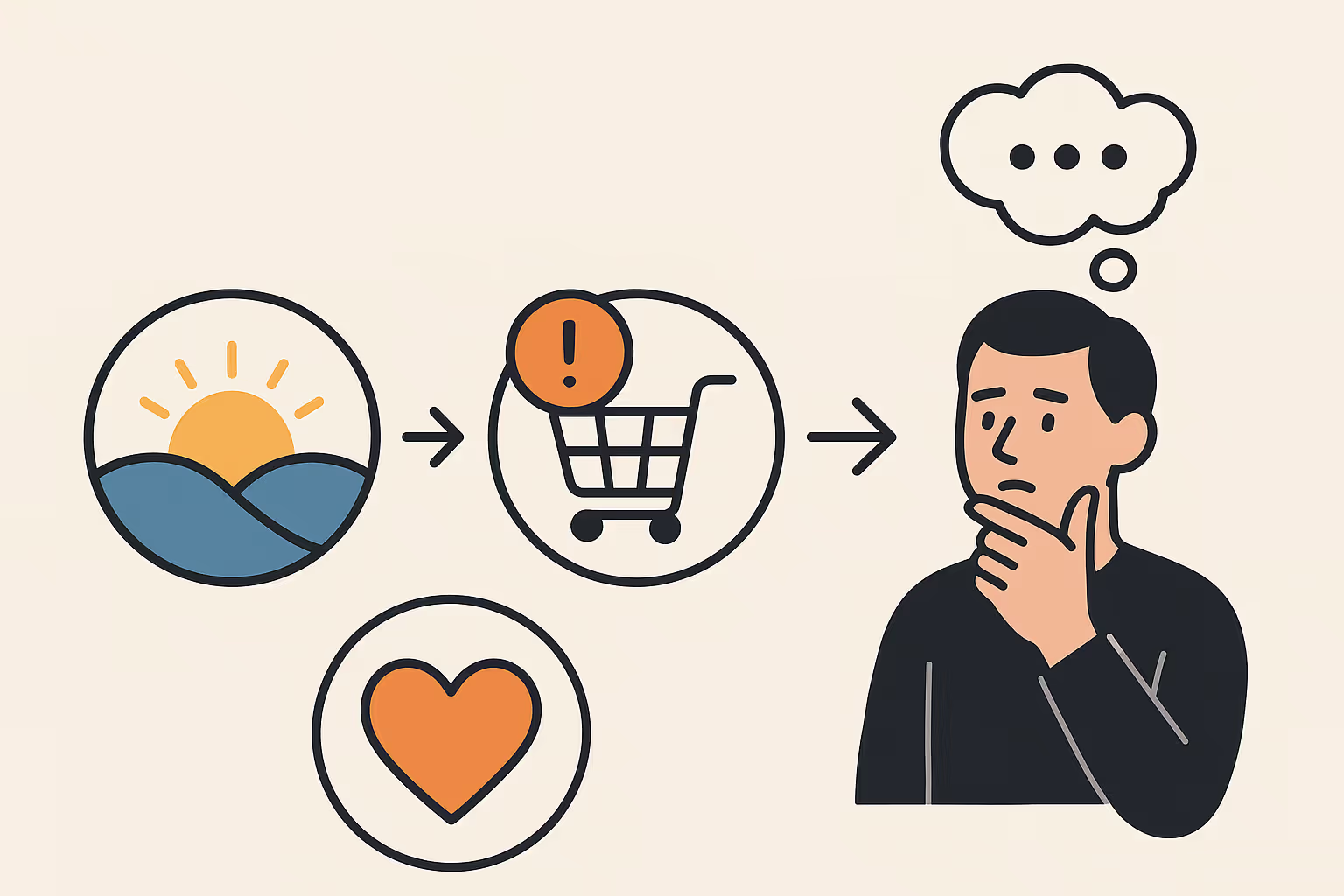
Every message has a goal. And behind every goal is an emotion.
Do you want your writing to:
• Inspire? (go for awe, optimism, courage)
• Convert? (use urgency, curiosity, FOMO)
• Build trust? (lean into empathy, honesty, reassurance)
Before you type the prompt, ask yourself:
“What do I want the reader to feel after reading this?”
That clarity will change how you prompt — and how effective ChatGPT becomes.
Train ChatGPT With Emotional Voice Instructions
You can guide tone and emotion in the system or user prompt. Here’s how:
Example Instructions:
• “Write this with a confident, reassuring tone for someone feeling overwhelmed.”
• “Use persuasive language that feels respectful, not pushy.”
• “Frame this update as exciting progress, not boring news.”
The more specific you are about the feeling you’re aiming for, the more accurately ChatGPT can replicate it.
Tip: If you’re writing content for clients, brand tone guidelines work great here.
Feed It Emotional Examples (Context Is Gold)

The fastest way to teach ChatGPT emotion? Show it what “emotionally intelligent writing” looks like.
What to do:
Give ChatGPT 2–3 examples of how you or another writer handle tone.
Then ask it to match the emotional feel.
Prompt Example:
“Here are two examples of emotionally engaging marketing copy.
Now write a third one that sounds similar — warm, trustworthy, and a little cheeky.”
This helps the model develop a “feel” for your emotional writing style — like muscle memory for words.
Use Emotional Contrast to Create Impact
Flat writing bores people. Emotional contrast keeps them hooked.
What’s emotional contrast?
It’s the tension between two feelings — like relief after stress, surprise after boredom, or inspiration after doubt.
Teach ChatGPT by prompting like this:
“Write a story that begins with frustration but ends with optimism. Use clear emotional transitions.”
This technique keeps your audience emotionally engaged and helps the AI generate more dynamic content.
Rewrite Flat Text into Emotionally Intelligent Responses
A powerful exercise: teach ChatGPT to revise neutral content into emotionally rich versions.
Try this prompt:
“Take this paragraph and rewrite it to sound more encouraging and hopeful, while keeping the key message the same.”
Repeat with other tones: sincere, inspiring, calming, excited, even sarcastic.
This teaches ChatGPT how to emotionally reframe — one of the most valuable skills in persuasion, leadership, and storytelling.
Leverage Role-Playing to Simulate Empathy
ChatGPT thrives when given roles. Use them to generate emotionally aware responses.
Example prompts:
• “You’re a therapist helping someone deal with burnout. Respond with warmth, understanding, and zero judgment.”
• “You’re a mentor giving constructive feedback to someone who just failed a big presentation. Be supportive, not harsh.”
By placing ChatGPT in the shoes of someone emotionally intelligent, you get more nuanced, thoughtful answers.
Mix Emotions into Structural Prompts
Your typical prompt structure might be:
“Write a 3-step guide for [topic].”
Upgrade it like this:
“Write a 3-step guide that feels calming and empowering for someone who feels overwhelmed.”
Or
“Make each step feel like a gentle encouragement, not an instruction.”
You’re not just telling ChatGPT what to write — you’re telling it how it should feel to the reader at each step.
Add “Emotional Filters” to Your Revision Workflow
Once you get a response from ChatGPT, run it through an emotional filter.
Ask the model to critique or revise based on the emotional experience of the reader.
Prompt Example:
“Review this message as if you’re a reader feeling anxious. Highlight any wording that might add pressure or confusion. Suggest improvements.”
This is like giving ChatGPT emotional glasses. It teaches the model to evaluate tone — not just grammar or facts.
Build Character Voice with Emotional Backstories
ChatGPT can craft more emotionally resonant content when characters or personas have depth.
Prompt Example:
“Create a customer support character who is kind but occasionally sarcastic. Give them a short backstory that influences how they respond to complaints.”
When ChatGPT understands the emotional why behind a character, it becomes more consistent, natural, and human in tone.
Turn Emotions Into Editing Criteria
Want stronger writing? Use emotion as a filter when editing.
Prompt to try:
“Go through this paragraph and remove anything that feels cold, robotic, or emotionless. Replace it with warmth and relatability.”
This teaches ChatGPT to treat emotion as a success metric — not just clarity or grammar.
Train for Empathy in Conflict or Crisis
One of the most valuable skills AI can learn is responding gently in tough moments.
Prompt example:
“Write a response to someone who just got laid off. Be empathetic, hopeful, and avoid cliches.”
These kinds of prompts show ChatGPT how to hold space — a key trait in emotionally intelligent communication.
Combine Emotions for Layered Writing
Most real-life communication involves more than one feeling. Help ChatGPT reflect that nuance.
Prompt example:
“Write a message that is both excited and grateful — like someone thanking their mentor after getting promoted.”
By blending emotions, your AI outputs start to feel less robotic and more real.
Use “Tone Swaps” to Reframe Emotion
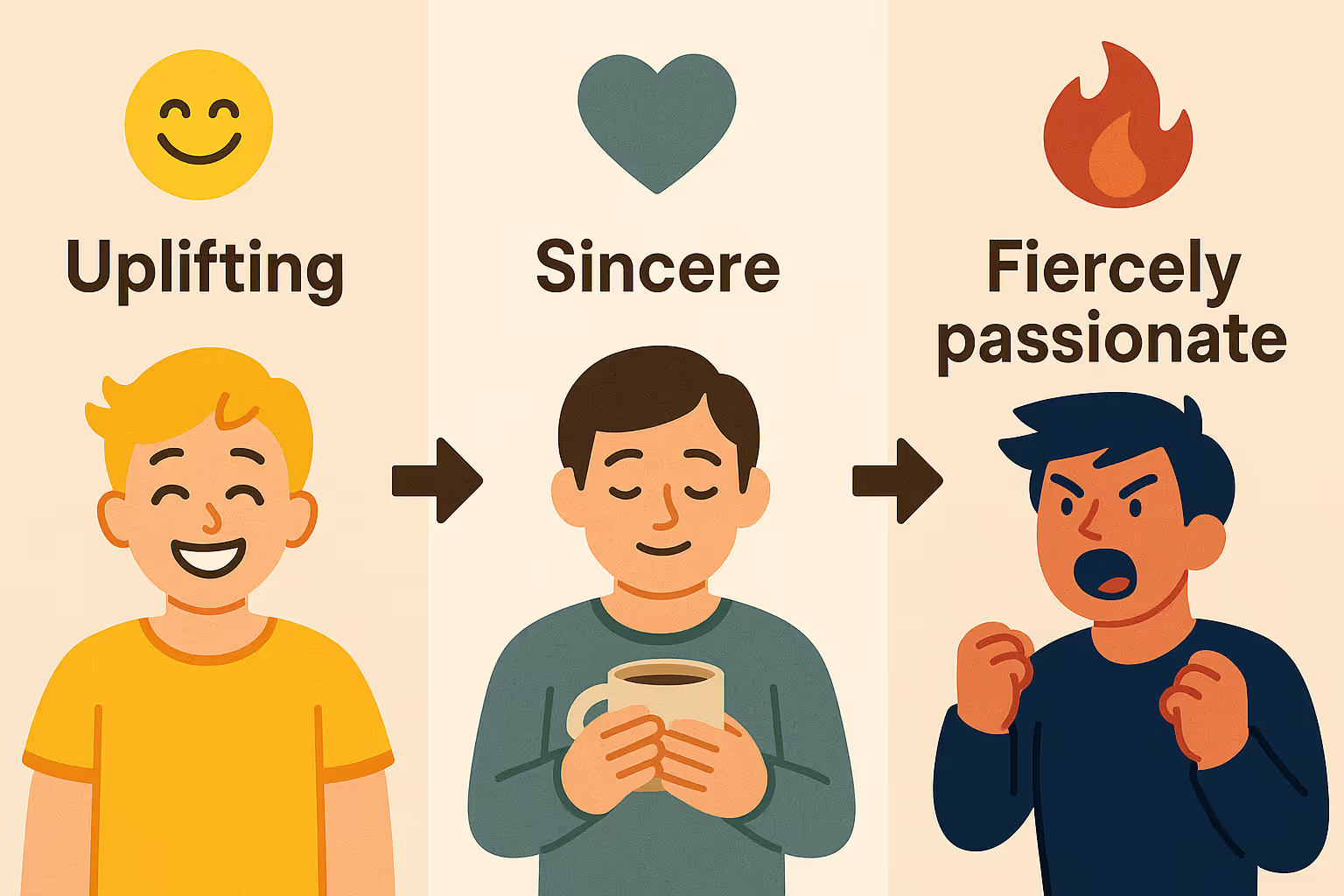
Teach ChatGPT how to shift tone without changing the meaning.
Try this prompt:
“Here’s a paragraph. Rewrite it in three different tones:
1. Uplifting
2. Sincere
3. Fiercely passionate
Keep the same message.”
This helps ChatGPT learn emotional flexibility — which is vital for adapting content to different audiences.
Train ChatGPT to Ask Emotionally-Aware Questions
Emotional intelligence isn’t just about responding — it’s also about asking better questions.
Prompt idea:
“You’re helping someone set goals but they’re overwhelmed. What questions would you ask to help them feel supported, not pressured?”
This turns ChatGPT into a more thoughtful guide — not just a taskmaster.
Wrap-Up: Teaching Emotion Isn’t Optional. It’s Essential.
in 2026, emotionless AI writing won’t cut it.
If you want to stand out, get attention, or build trust — your words need to feel like something.
Teaching ChatGPT to write with feeling doesn’t take genius.
It takes the right prompts.
So the next time you’re staring at bland copy or flat scripts, don’t settle. Prompt with purpose. Inject some soul.
Because in a sea of sameness, emotional content is the only thing that actually connects
Next step: turn this article into output with ChatGPT prompts, or go deeper with Claude prompts.
Prompts for this topic
Put this article to work with ready-to-use prompts from the God of Prompt library.
Keep reading

Is ChatGPT Down? Try These Fixes!
Is ChatGPT down? Learn how to check its status, fix common issues, and find alternatives when it’s not working. Get troubleshooting tips and real-time updates here


ChatGPT Resume: 10 Best Prompts to Try
Learn how to create a strong resume with ChatGPT prompts that highlight your skills and pass ATS checks.”


Best ChatGPT Prompts for Supply Chain Risks
Practical ChatGPT prompts to evaluate suppliers, forecast demand, build contingency plans, and reduce costs while improving supply chain resilience.

The best of the blog, in your inbox
One email when notable prompts, tools, and model updates land. No spam, unsubscribe anytime.
Join 100,000+ subscribers. One email a week, real prompts, tools, and model updates. Unsubscribe anytime.