Introducing ChatGPT o3 and o4-mini: What Are They
OpenAI just launched o3 and o4-mini—two powerful AI models built for smarter reasoning, better tool use, and real-world tasks. Here’s what makes them different and how to start using them.


On this page
- What Is OpenAI o3?
- What Is OpenAI o4-mini?
- o3 vs o4-mini: Key Differences
- Tool Use Just Got Smarter
- New Levels of Visual Reasoning
- Performance on Academic Benchmarks
- Agentic Problem Solving in Action
- Instruction Following: More Literal, More Useful
- Real-World Use Cases for o3
- Real-World Use Cases for o4-mini
- Benchmark Scores Breakdown
- Behind the Scenes: Reinforcement Learning at Scale
- How to Access o3 and o4-mini in ChatGPT
- Final Thoughts: What This Means for the Future of AI
OpenAI just launched o3 and o4-mini, and they change how ChatGPT thinks and works.
These models don’t just give answers—they figure things out.
They know when to search, run code, read a file, or generate an image.
This guide breaks down what makes them different, when to use each one, and how to get the most out of their reasoning power.
ALSO READ: Want Better AI Results? Try This Simple LLM Prompting Trick

What Is OpenAI o3?
o3 is the smartest model OpenAI has released. It’s made for hard problems—math, coding, science, and anything that needs deep analysis.
It doesn’t guess.
It reasons, plans, and uses tools when needed. If you want thoughtful answers that go beyond surface-level replies, this is the model for it.
What Is OpenAI o4-mini?
o4-mini is fast, smart, and efficient.
It’s a smaller version of o3, but still holds up in coding, math, and reasoning tasks.
It’s built for speed and volume—great for high-throughput work without giving up accuracy.
o3 vs o4-mini: Key Differences
Both models are impressive—but they’re built for different jobs.
Here’s how they stack up:
Power vs Speed
• o3 is built for deep, complex reasoning.
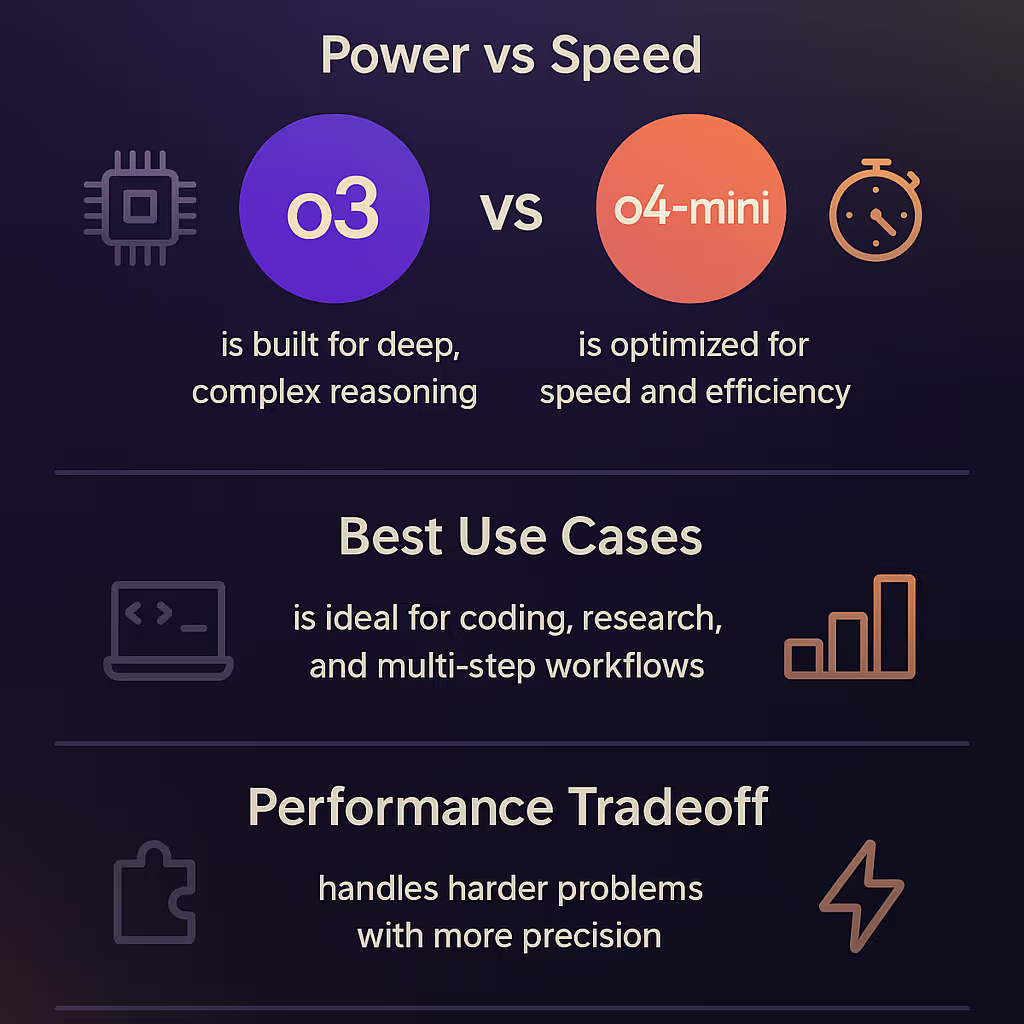
• o4-mini is optimized for speed and efficiency.
Best Use Cases
• o3 is ideal for coding, research, and multi-step workflows.
• o4-mini works great for high-volume tasks, quick analysis, and cost-sensitive work.
Performance Tradeoff
• o3 handles harder problems with more precision.
• o4-mini gets more done, faster, with slightly less depth.
Tool Use Just Got Smarter
This is where things really level up. Both o3 and o4-mini don’t just have tools—they know how to use them.
They can now:
• Choose when to use tools like:
• Web browsing
• Python (code interpreter)
• File analysis
• Image generation
• Use tools in combination, within one prompt, without hand-holding.
• Think before using: Instead of guessing, they reason through whether a tool is needed, what it should do, and how to format the result.
This makes their answers more complete, more useful—and closer to how a smart assistant should behave.
New Levels of Visual Reasoning
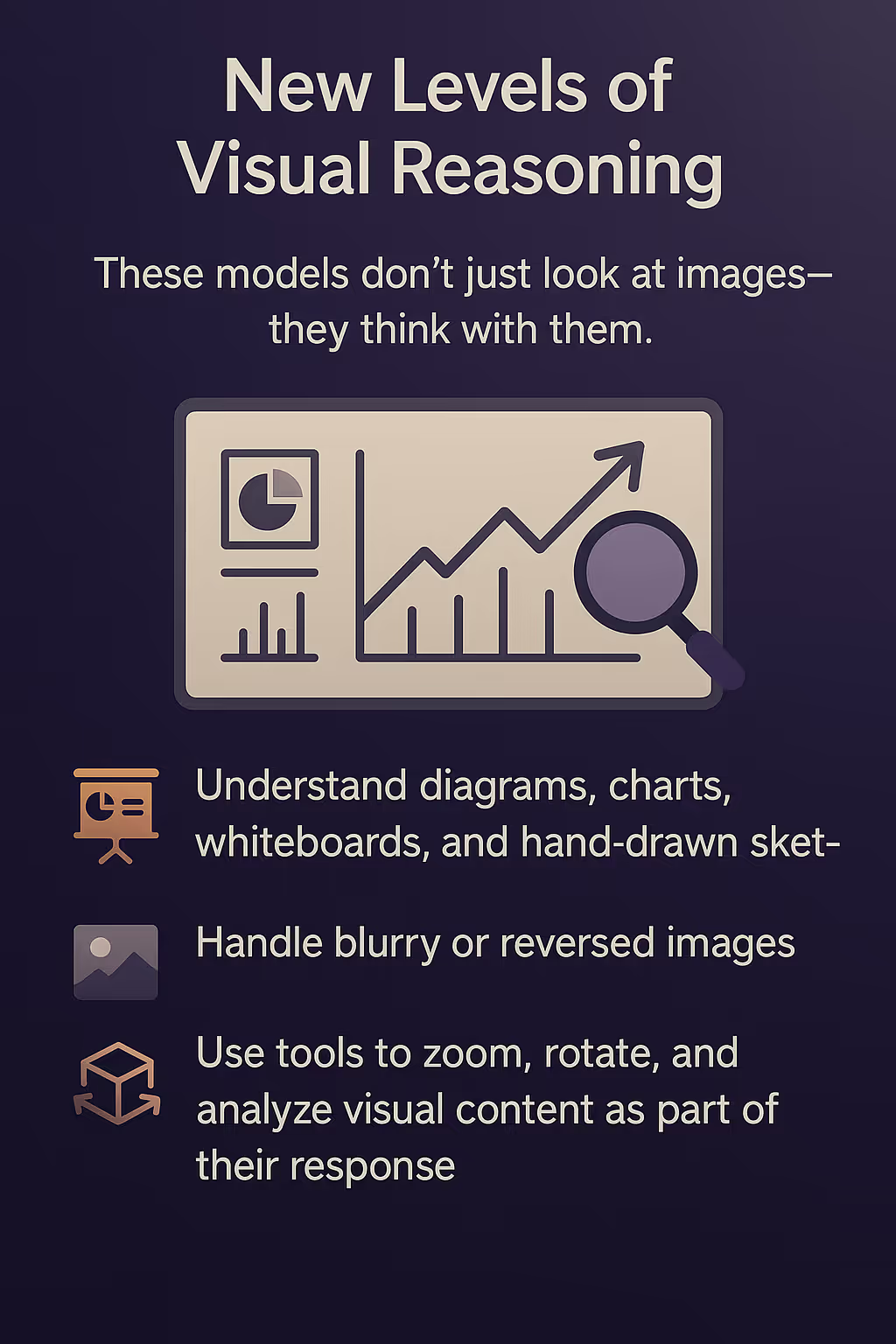
These models don’t just look at images—they think with them.
That means they can:
• Understand diagrams, charts, whiteboards, and hand-drawn sketches
• Handle blurry or reversed images
• Use tools to zoom, rotate, and analyze visual content as part of their response
It’s not just image recognition. It’s multimodal reasoning.
Even if you’re uploading a math problem, a scientific figure, or a photo of your notes—o3 and o4-mini can follow along and give meaningful answers.
Here are the next three sections, written in your clear, conversational tone with just the details that matter:
Performance on Academic Benchmarks
Both models set new records—especially o3.
• o3 is top-tier on SWE-Bench, Codeforces, GPQA, AIME, and MMMU
• o4-mini holds its own too, especially when tools are enabled
These aren’t just numbers—they reflect real-world performance in research, coding, visual reasoning, and math.
Agentic Problem Solving in Action
Here’s where things get exciting.
o3 can now handle full workflows on its own:
• Search → analyze → calculate → generate → explain
• All in one go, no back-and-forth needed
Give it a complex, multi-step task like forecasting energy use from live data—it’ll grab the info, write Python code, plot the result, and tell you what it means.
Instruction Following: More Literal, More Useful
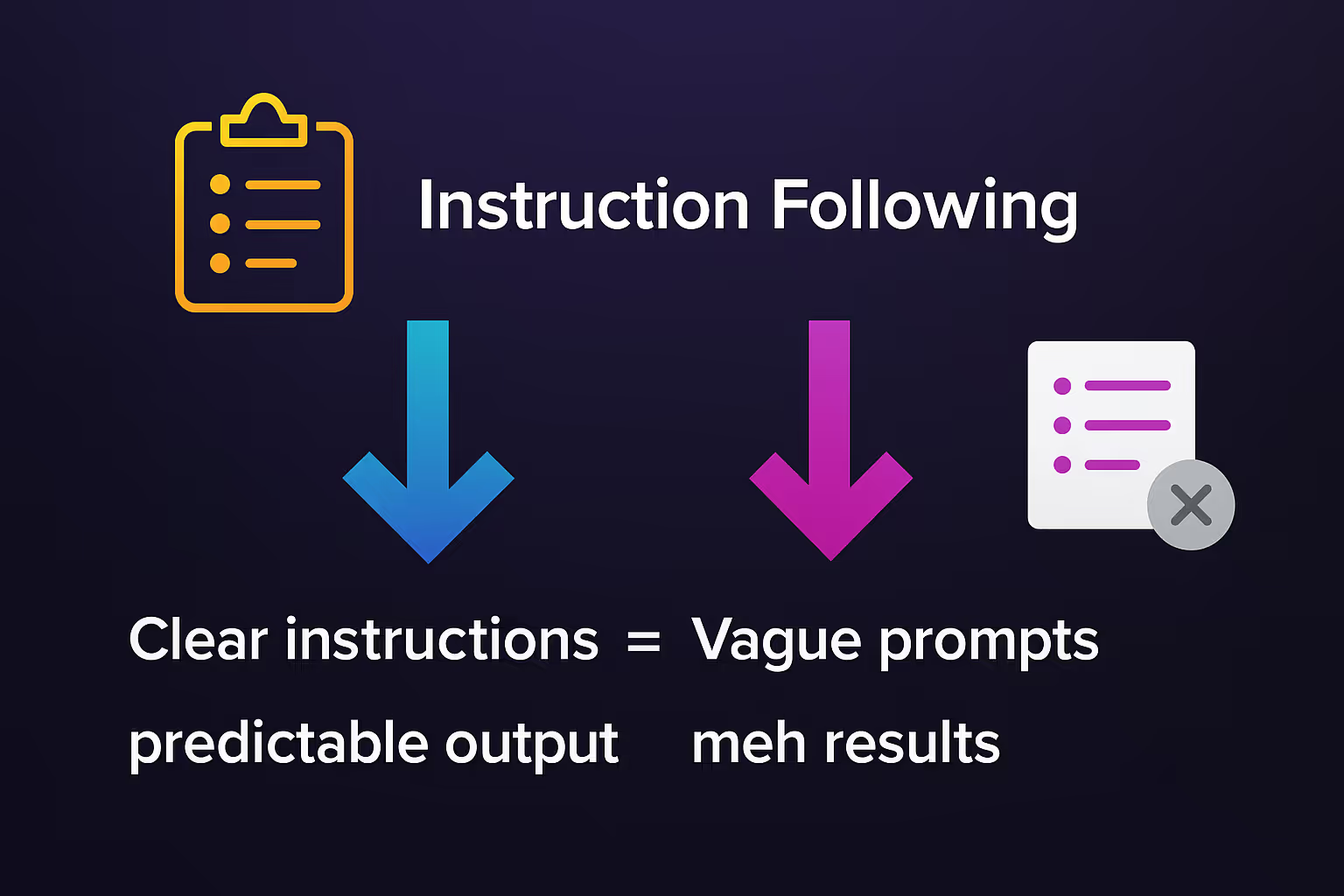
These models don’t guess—they follow.
• Clear instructions = predictable output
• Vague prompts = meh results
If you say “give me 5 bullet points, no intro,” that’s what you’ll get.
No fluff, no rambling.
This makes them super reliable for structured tasks, content generation, and precision workflows.
Real-World Use Cases for o3
o3 is your go-to when depth matters.
• Perfect for research, technical writing, and deep analysis
• Strong in science, engineering, coding, and business strategy
• Handles complex prompts without needing tool access
If you want a smart partner that can reason, plan, and explain—it’s this one.
Real-World Use Cases for o4-mini
o4-mini is lightweight but powerful.
• Ideal for high-volume requests and daily operations
• Great at handling structured workflows, fast replies, and math-based queries
• Efficient for analytics, dashboards, support, and basic research
It’s built for scale and speed, with enough reasoning to keep things sharp.
Benchmark Scores Breakdown
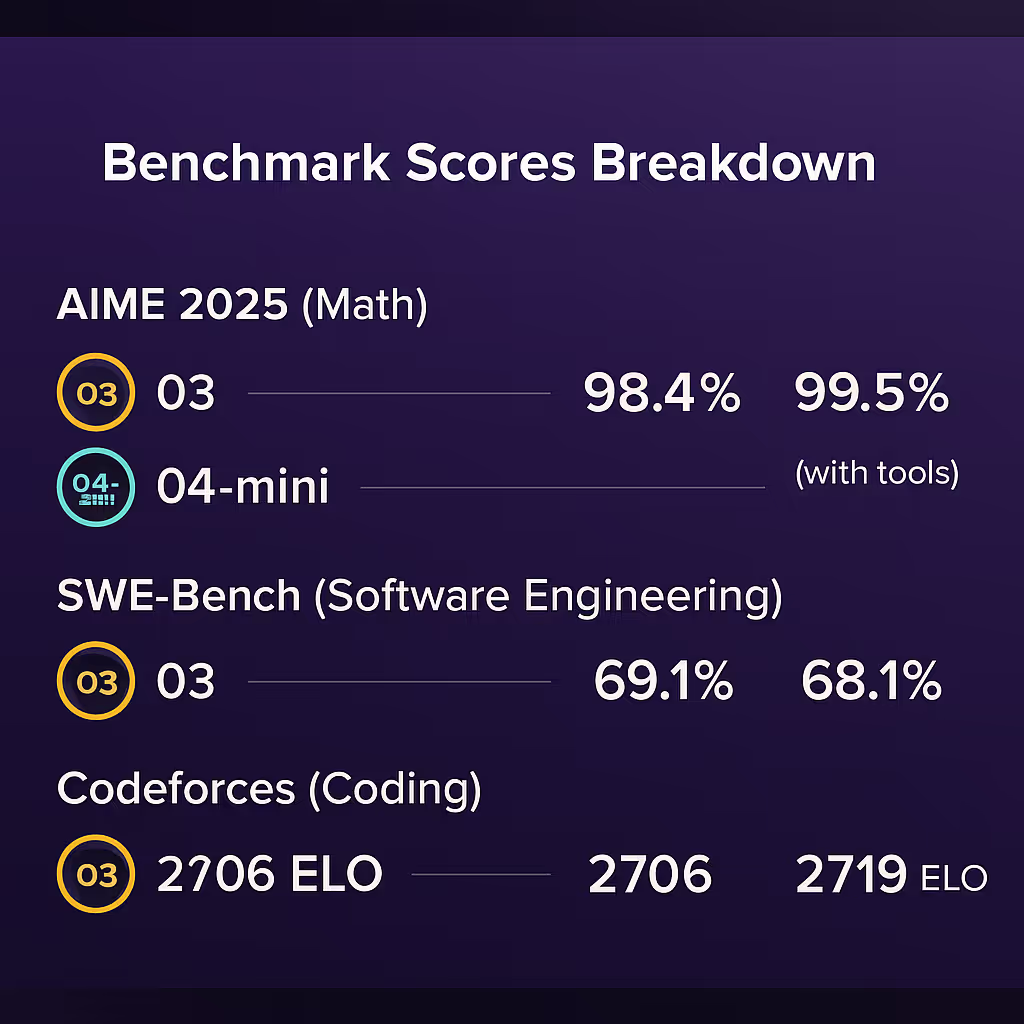
Here’s a quick look at how these models stack up:
AIME 2025 (Math)
• o3: 98.4% (with tools)
• o4-mini: 99.5% (with tools)
SWE-Bench (Software Engineering)
• o3: 69.1%
• o4-mini: 68.1%
Codeforces (Coding)
• o3: 2706 ELO
• o4-mini: 2719 ELO
These aren’t just benchmarks—they show where each model shines.
Use o3 for top-tier performance. Use o4-mini when cost and speed matter most.
Behind the Scenes: Reinforcement Learning at Scale
What makes o3 and o4-mini so sharp?
OpenAI trained them with massive reinforcement learning—more compute, more thinking time.
• RL helps them decide how to think, not just what to say
• Tool use, planning, and reasoning all improved from this
• The more they “think,” the better they perform
Basically: OpenAI retraced the scaling path… and it worked.
How to Access o3 and o4-mini in ChatGPT
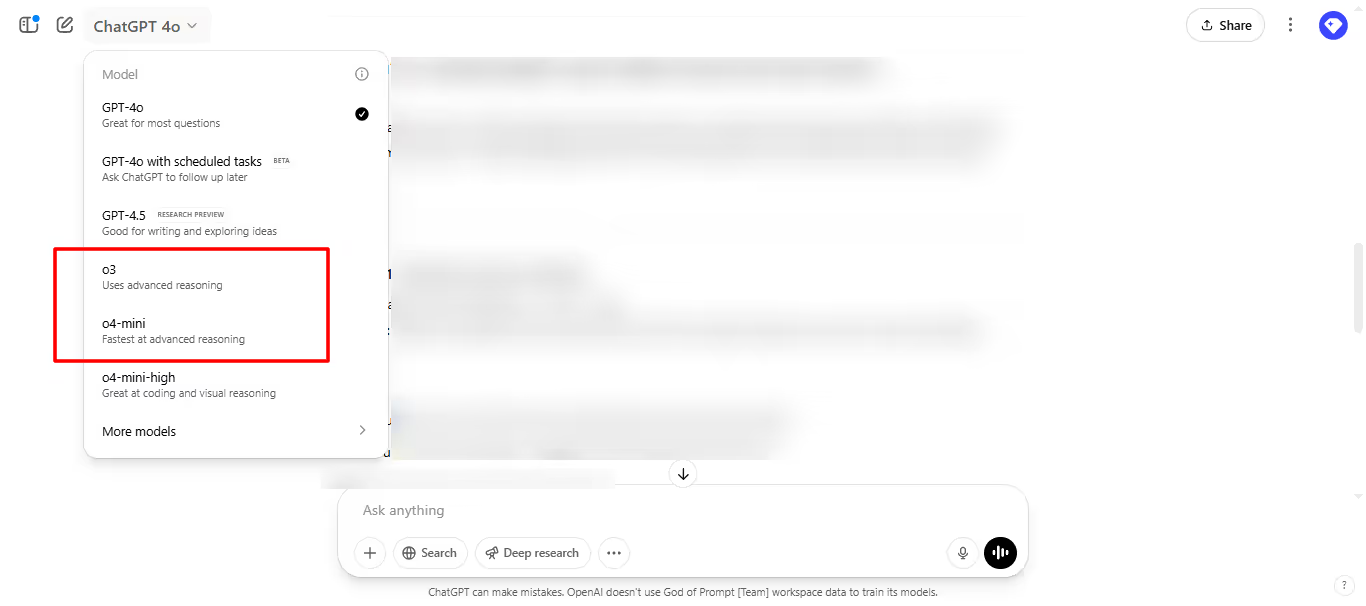
Wondering if you already have access?
• o3 and o4-mini are part of the o-series rollout inside ChatGPT
• If you’re on ChatGPT Plus or Team, you’re likely already using one
• API users can select them directly (check model dropdowns)
If it says “o3” or “o4-mini” in the top left—or your responses suddenly got smarter—you’re probably in.
Final Thoughts: What This Means for the Future of AI
This release points to something bigger:
Models are getting more agentic, more thoughtful, and more capable—fast.
• o3 shows what’s possible when a model can plan, search, code, and reason
• o4-mini proves you can get solid reasoning without sacrificing speed or cost
• Both feel more useful, more natural, more helpful
This isn’t just an upgrade. It’s a shift toward AI that actually helps.
Put this into practice: browse ChatGPT prompts and Claude prompts in the God of Prompt library — copy, paste, and run.
Prompts for this topic
Put this article to work with ready-to-use prompts from the God of Prompt library.
Keep reading

Introducing ChatGPT 5.2: Everything You Need to Know
Discover everything about ChatGPT 5.2: faster reasoning, fewer hallucinations, better coding, and 70% accuracy vs industry professionals. Here’s what changed.


Introducing ChatGPT 5.1: Here’s Everything You Need to Know
ChatGPT 5.1 is here with warmer responses, better instruction following, and new personalization options. Learn what’s new and how to use the upgraded models now.

Introducing ChatGPT Atlas: Everything You Need To Know
Discover ChatGPT Atlas — OpenAI’s newest innovation redefining how we interact with AI. Learn what ChatGPT Atlas is, its key features, capabilities, release details, and how it transforms productivity, creativity, and communication. Get the full breakdown in this complete guide!


The best of the blog, in your inbox
One email when notable prompts, tools, and model updates land. No spam, unsubscribe anytime.
Join 100,000+ subscribers. One email a week, real prompts, tools, and model updates. Unsubscribe anytime.