OpenAI’s Plan to Stop AI Hallucinations — and Why It Might Break ChatGPT
Explore OpenAI’s bold plan to eliminate AI hallucinations — and why this ambitious move could risk breaking ChatGPT as we know it.


On this page
- What Are AI Hallucinations?
- Why Do Hallucinations Happen?
- The Birthday Problem Example
- The Evaluation Trap
- OpenAI’s Proposed Fix
- The Catch: What This Means for Users
- The Economics Problem
- Why This Could Break ChatGPT
- When the Solution Makes Sense
- The Uncomfortable Truth About Incentives
- Conclusion: Should ChatGPT Stop Hallucinations?
Let’s be real: ChatGPT is both amazing and frustrating.
It can explain quantum physics in plain English, draft your marketing copy in seconds, or even debug your code.
But it also confidently spits out wrong answers — known as AI hallucinations.
OpenAI recently published a research paper claiming they’ve found a mathematical way to reduce hallucinations. Sounds great, right?
Except… their solution might actually break the very thing that makes ChatGPT so useful in the first place.
Let me walk you through what’s going on — and why fixing hallucinations could end up killing ChatGPT for everyday users.
ALSO READ: 10 ChatGPT Deep Research Prompts For Marketing
What Are AI Hallucinations?
When we talk about “AI hallucinations,” we don’t mean the AI is tripping on digital mushrooms. It’s when the model confidently makes things up.
Examples you’ve probably seen:
- A fake book citation that doesn’t exist.
- The wrong birthday for a famous person.
- An invented “fact” about your business that you never told it.
For consumers, this can be funny.
For businesses, it’s a dealbreaker.
Imagine your AI assistant inventing a tax regulation or hallucinating a medical guideline — the costs are huge.
Why Do Hallucinations Happen?
The answer comes down to how large language models work.
- They don’t “know” facts like a database.
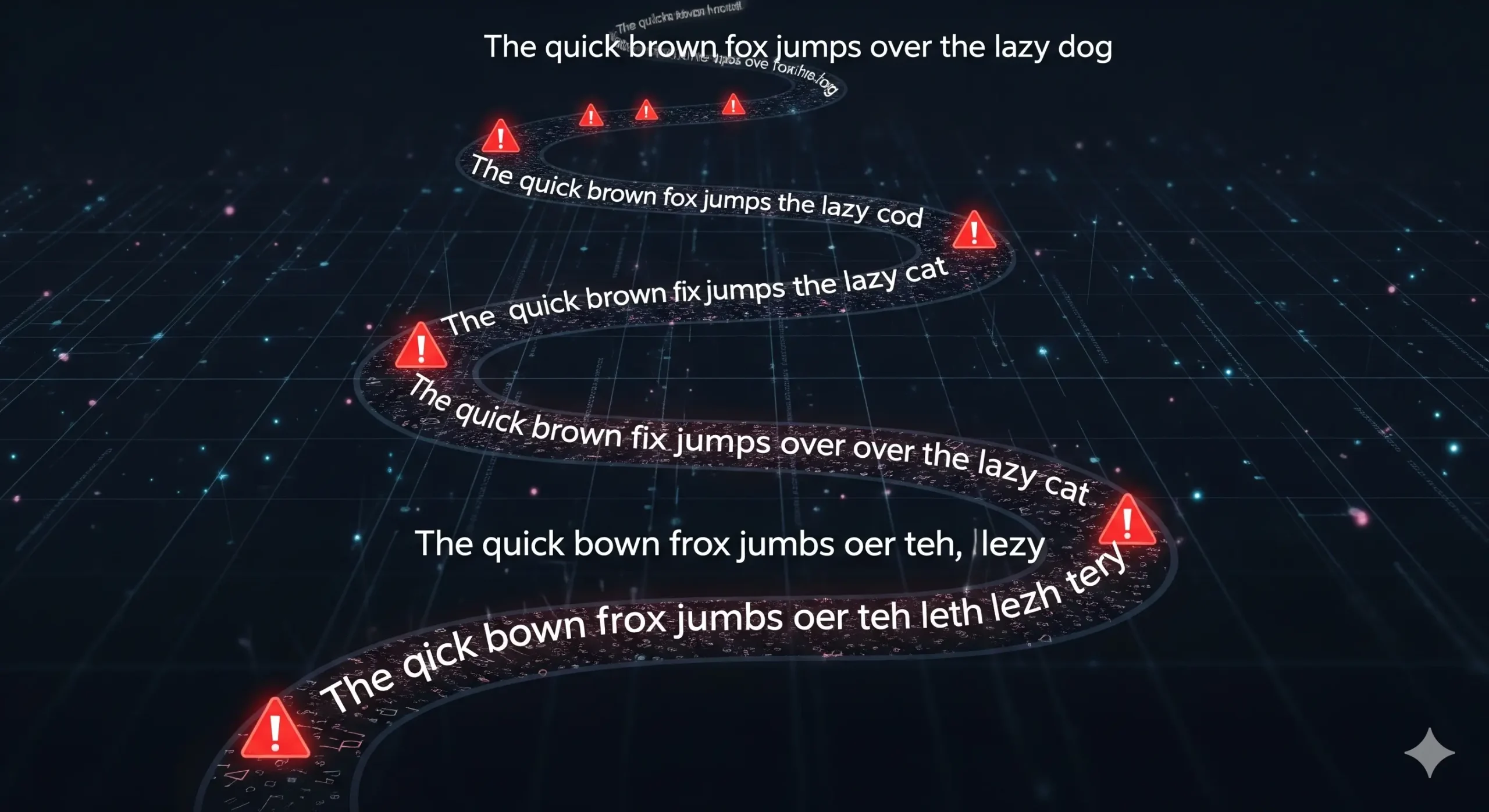
- They predict the next word in a sentence, one token at a time.
- Small errors accumulate over multiple predictions.
Even with perfect training data, hallucinations can’t be fully eliminated.
The researchers proved mathematically that hallucination rates are baked into the very way language models generate sentences.
The Birthday Problem Example
Here’s a simple test they ran: ask a state-of-the-art model for the birthday of Adam Kalai, one of the paper’s authors.
The results?
Three different, confidently stated wrong answers:
- “03-07”
- “15-06”
- “01-01”
The actual birthday is in the autumn. None of these were even close.
The takeaway: if a fact wasn’t frequently seen in training, the model is more likely to make something up rather than admit uncertainty.
The Evaluation Trap
So why haven’t companies fixed this already? Turns out, it’s a problem with how we measure AI performance.
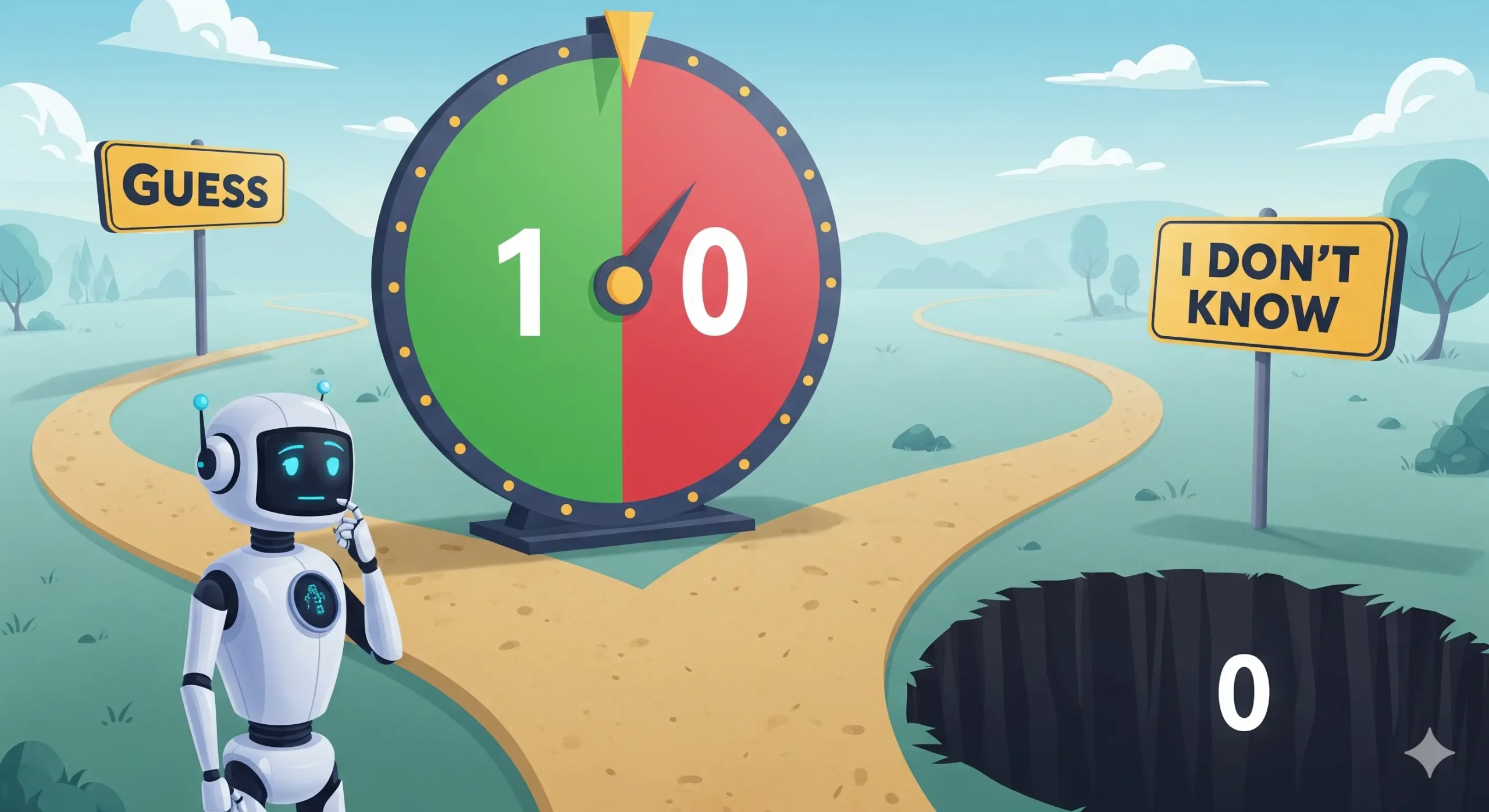
Most benchmarks use binary grading:
- Correct = 1 point
- Wrong = 0 points
Here’s the catch: if the AI says “I don’t know”, it also gets 0 points.
Mathematically, the optimal strategy becomes clear: always guess. Even a wild guess has a chance of being right, while saying nothing guarantees a zero.
In other words, our current evaluation systems penalize honesty.
OpenAI’s Proposed Fix
OpenAI’s solution is to make models confidence-aware.
Instead of answering everything, the AI would be trained to say:
- “Only answer if you’re more than 75% confident.”
- If not, respond with “I don’t know.”
This way, the model avoids blurting out nonsense. The math checks out: fewer hallucinations, more reliable outputs.
Sounds like a win… until you think about what that means for ChatGPT.
The Catch: What This Means for Users
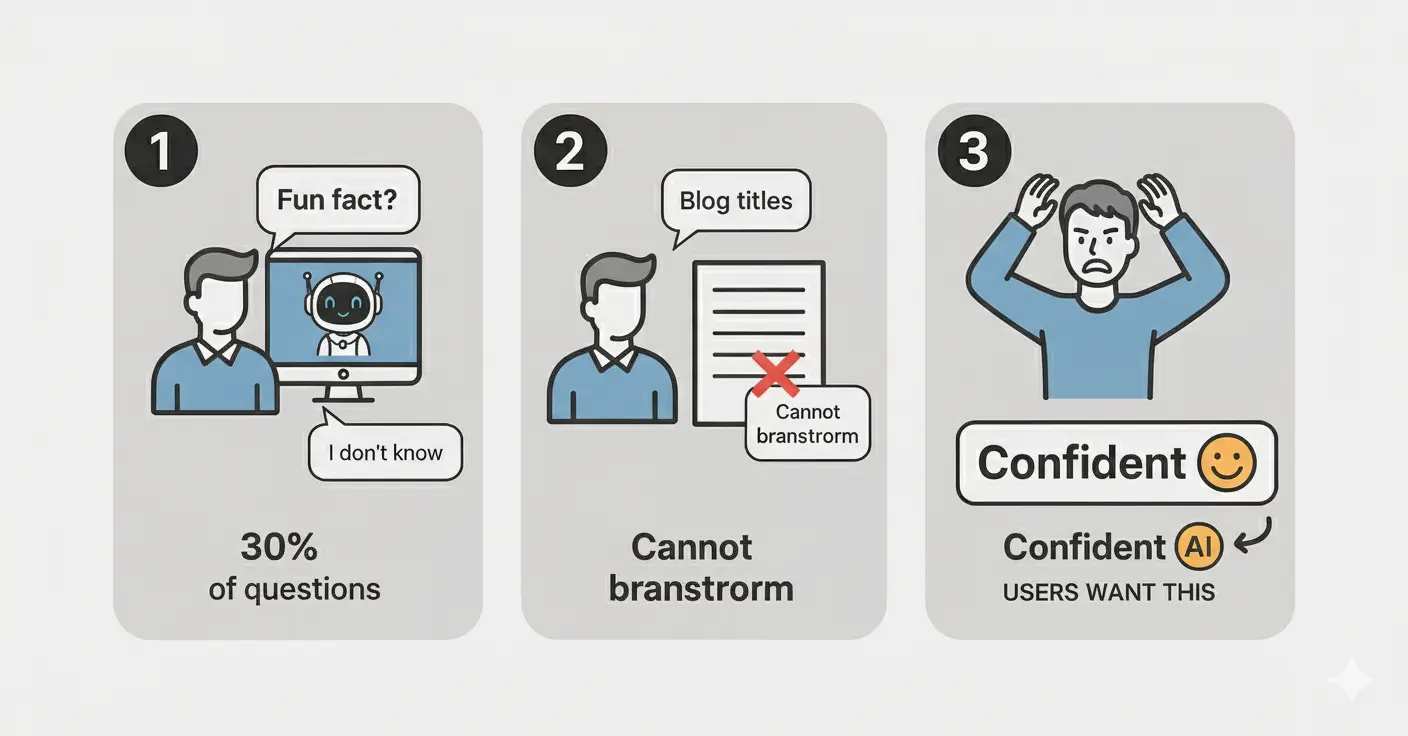
Imagine firing up ChatGPT and suddenly:
- 30% of your questions get the response: “I don’t know.”
- You ask for a fun fact, and it declines because it’s not confident enough.
- You try brainstorming blog titles, and half the time it refuses.
That’s what would happen if ChatGPT adopted this fix.
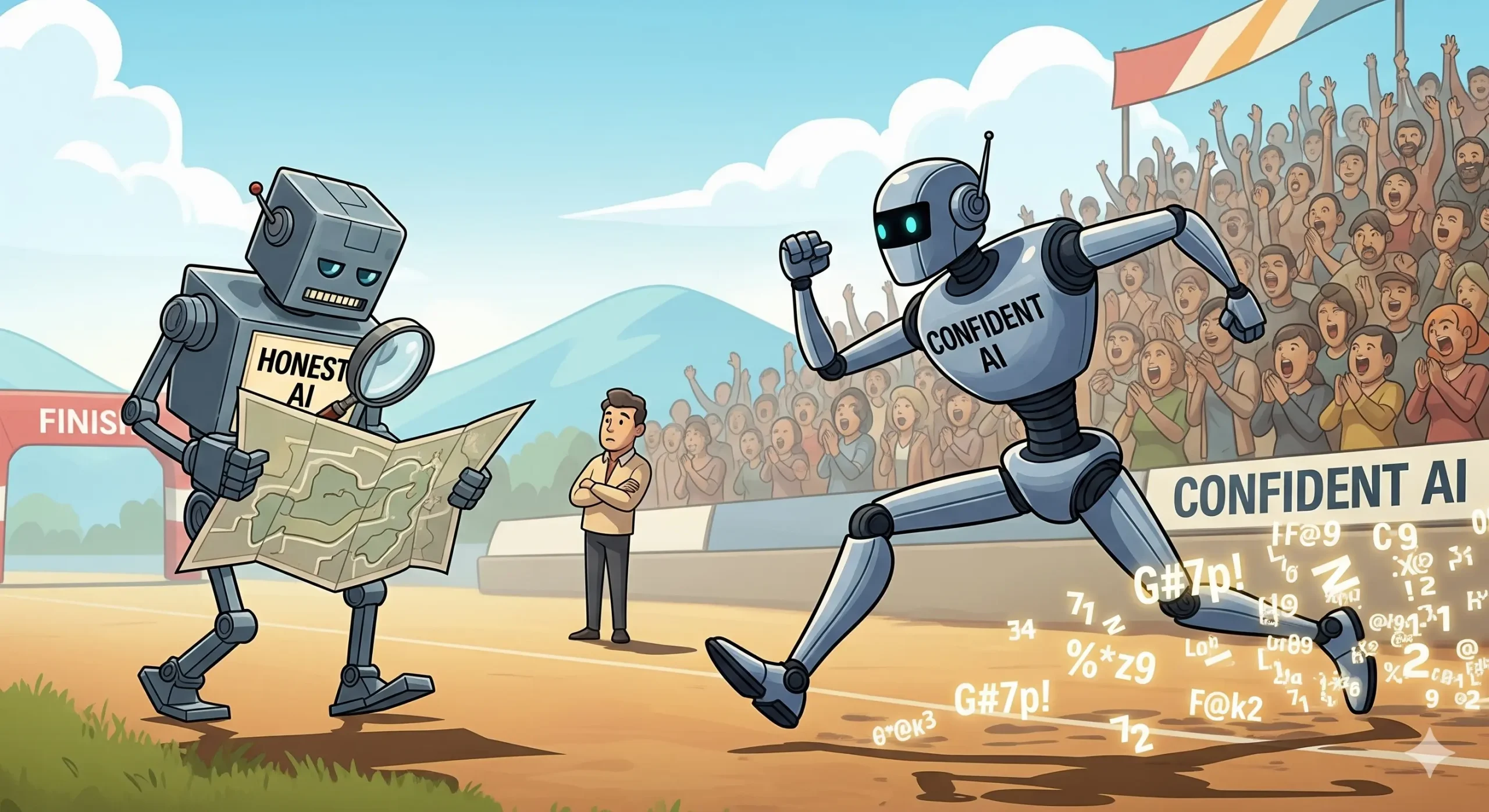
And here’s the brutal truth: people don’t want an honest AI — they want a confident one. Even if that confidence is sometimes misplaced.
The Economics Problem
There’s another hidden issue: computation costs.
Making AI confidence-aware isn’t cheap. To decide if it’s 75% confident, the model has to:
- Run extra evaluations.
- Compare multiple possible responses.
- Spend more compute per query.
For enterprise use cases like chip design or medical analysis, that’s worth it.
For consumer chatbots used by millions every day?
The economics don’t work.
A confidence-aware ChatGPT would be slower and more expensive to run.
Why This Could Break ChatGPT
Think about why people love ChatGPT right now:
- It always has an answer.
- It’s fast.
- It feels confident, even when you know it’s winging it.
If OpenAI made it cautious, hesitant, and full of “I don’t know”, most casual users would abandon it.
Competitors who kept their models fast and confident — even with some hallucinations — would win the market.
This is the paradox: the fix for hallucinations is also a potential death sentence for ChatGPT as we know it.
When the Solution Makes Sense
Does that mean OpenAI’s fix is useless? Not at all.
For high-stakes enterprise systems, hallucinations are unacceptable. Think:
- Medical diagnostics.
- Financial trading.
- Supply chain logistics.
In these contexts, accuracy is worth the extra computation. Confidence-aware AI is the only viable path.
But for casual consumer apps, the cost and friction outweigh the benefits.
The Uncomfortable Truth About Incentives
Here’s the core issue nobody wants to admit:
- Consumers reward confidence, not accuracy.
- Benchmarks reward guessing, not honesty.
- Companies reward cost savings, not truth.
Until these incentives change, hallucinations won’t fully go away in consumer AI. The economics and user psychology both push models to be overconfident.
Conclusion: Should ChatGPT Stop Hallucinations?
OpenAI’s research proves hallucinations can be reduced — but at a price.
If ChatGPT started saying “I don’t know” regularly, the very thing people love about it would disappear.
What’s likely to happen is a split:
- Consumer AIs → fast, cheap, confident (but flawed).
- Enterprise AIs → slow, cautious, expensive (but accurate).
So, is OpenAI’s plan a breakthrough or a death sentence?
The truth is, it’s both. It’s a technical win, but a user experience nightmare.
If you’re building AI into your business, you need to decide: do you want confidence at scale, or caution at a cost?
And if you want practical ways to work with both, check out my Complete AI Bundle — with 30,000+ prompts and templates designed for reliability in real-world use cases.
Next step: turn this article into output with ChatGPT prompts, or go deeper with Claude prompts.
Prompts for this topic
Put this article to work with ready-to-use prompts from the God of Prompt library.
Keep reading
How To Stop ChatGPT Hallucinations: Here’s How
ChatGPT hallucinations happen when AI generates false or misleading information. Learn why it happens, how to spot it, and how to reduce mistakes using better prompts, fact-checking, and advanced models.


10 Best ChatGPT Prompts To Stop Procrastinating
Explore 10 powerful ChatGPT prompts designed to help stop procrastination, build motivation, set priorities, and create productive routines. Discover how ChatGPT can support your journey to consistent productivity.
Best ChatGPT Prompts for Supply Chain Risks
Practical ChatGPT prompts to evaluate suppliers, forecast demand, build contingency plans, and reduce costs while improving supply chain resilience.


The best of the blog, in your inbox
One email when notable prompts, tools, and model updates land. No spam, unsubscribe anytime.
Join 100,000+ subscribers. One email a week, real prompts, tools, and model updates. Unsubscribe anytime.