Most large companies already run some form of AI. McKinsey's 2025 State of AI survey put the figure at 88%, up from 78% a year earlier. Yet only 39% of those firms report a measurable effect on profit. That gap is where business process automation with AI either earns its keep or quietly stalls. This guide walks through how enterprise teams move from scattered pilots to workflow automation that holds up in production.
The enterprise automation imperative: moving beyond legacy RPA to AI-driven workflows
Traditional robotic process automation handles predictable, rule-based tasks well. It copies data between systems and fills forms without complaint. The trouble starts when a process involves judgment, unstructured documents, or exceptions. A rules bot breaks the moment reality stops matching the script.
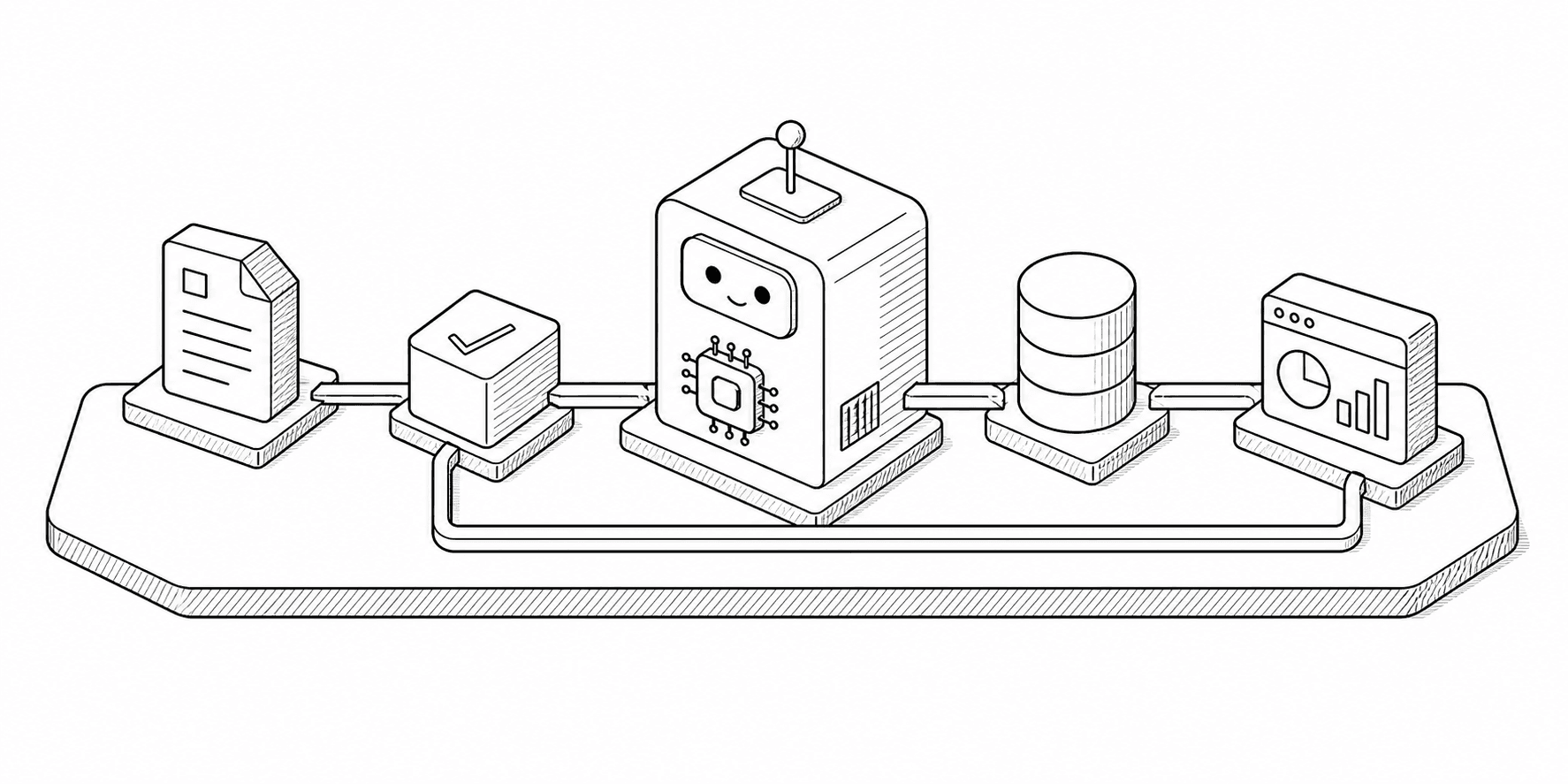
AI assistant for business process automation closes that gap. Machine learning reads messy invoices, language models interpret email requests, and the system decides rather than just executes. The demand shows in the numbers. Grand View Research valued the intelligent process automation market at 14.6 billion dollars in 2024 and expects it to reach 44.7 billion by 2030.
Rising complexity is also pushing companies forward. Camunda's 2025 State of Process Orchestration report found that 80% of organizations worry about "digital chaos" as their processes grow harder to manage. Gartner expects task-specific AI agents to appear in 40% of enterprise applications by the end of 2026, up from under 5% in 2025.
Pre-implementation assessment: identifying high-impact automation candidates
Automating the wrong process wastes money and trust. Before any build, map where work actually slows down and why. Look for tasks that are high volume, repeatable, and clearly measurable. A process nobody has timed is a poor first candidate.
Score each option against a few honest questions. How much manual effort does it consume each week? How often do errors force rework? Does the data live somewhere the system can reach today? Would anyone notice, and own it, when the automation fails?
Rank candidates by business value rather than technical novelty. Workflow automation AI pays off fastest on the dull, expensive tasks buried in finance, HR, and customer operations. Start there, prove the return, then move into harder cases with confidence.
Step-by-step guide: building and deploying AI process automation in enterprise systems
With a target chosen, deployment follows a clear sequence.
- Document the current process. Record every step, decision point, and handoff as it really happens, not as the manual claims.
- Define the success metric. Agree in writing on what good looks like, whether that is hours saved, error rate, or turnaround time.
- Prepare the data. Clean and connect the sources the model needs. Poor data is the most common reason pilots stall.
- Build a narrow prototype. Automate one slice from start to finish. Keep a person reviewing outputs while the system learns.
- Test against real cases. Feed it the messy exceptions, not only the tidy examples.
- Deploy with monitoring. Ship it, then watch accuracy, cost, and failures closely for the first months.
- Scale what works. Expand to adjacent processes once the metric holds steady.
Skipping the metric or the monitoring is how projects drift. A working prototype means little if nobody agreed what working meant.
Overcoming key implementation hurdles: legacy integration, security, and compliance
Most failures trace back to management, not model quality. Gartner predicts that more than 40% of agentic AI projects will be canceled by the end of 2027. It blames rising costs, unclear business value, and weak risk controls.
Legacy integration is the first wall teams hit. Older core systems often lack clean interfaces, so connecting them takes patience and the right middleware. Budget for that early rather than discovering it mid-project.
Security and compliance deserve equal weight. An automated workflow touching customer data must respect access rules, audit trails, and regional regulation such as the EU AI Act. Decide who reviews model decisions, and how you roll one back, before you grant it authority. Governance sounds dull next to the technology, yet it separates the systems that survive from the ones quietly switched off.
How Altamira.ai delivers high-ROI AI process automation for enterprise leaders
Altamira works with enterprise teams that need automation to hold up in production, beyond the pilot stage. The company pairs software engineering with applied AI, so system integration gets the same care as the model. That balance matters when so many projects fail on deployment rather than design.
Its intelligent process automation services cover the full path. That means assessing which workflows deserve automation, building them, connecting older systems, and monitoring performance once live. Altamira's AI automation agency services stay focused on measurable outcomes rather than pilots that only look good in a slide deck. Teams work alongside the client's own engineers, which keeps knowledge in house and shortens the route to a result that earns back its cost.
Final takeaways and next steps: launching your enterprise automation roadmap
Adoption is no longer the challenge. McKinsey's 88% shows almost everyone now uses AI somewhere in the business. The harder task is turning that use into the profit only 39% report, and that comes down to disciplined delivery.
Your roadmap does not need to start big. Choose one costly, well understood workflow. Set a clear metric, automate it from start to finish, and measure honestly before you expand. Each proven win funds the next and builds internal trust in the approach.
If you want a second opinion on which processes to automate first, Altamira's team can review your workflows and map a realistic sequence. Book a process automation assessment to see where AI would pay back the fastest.