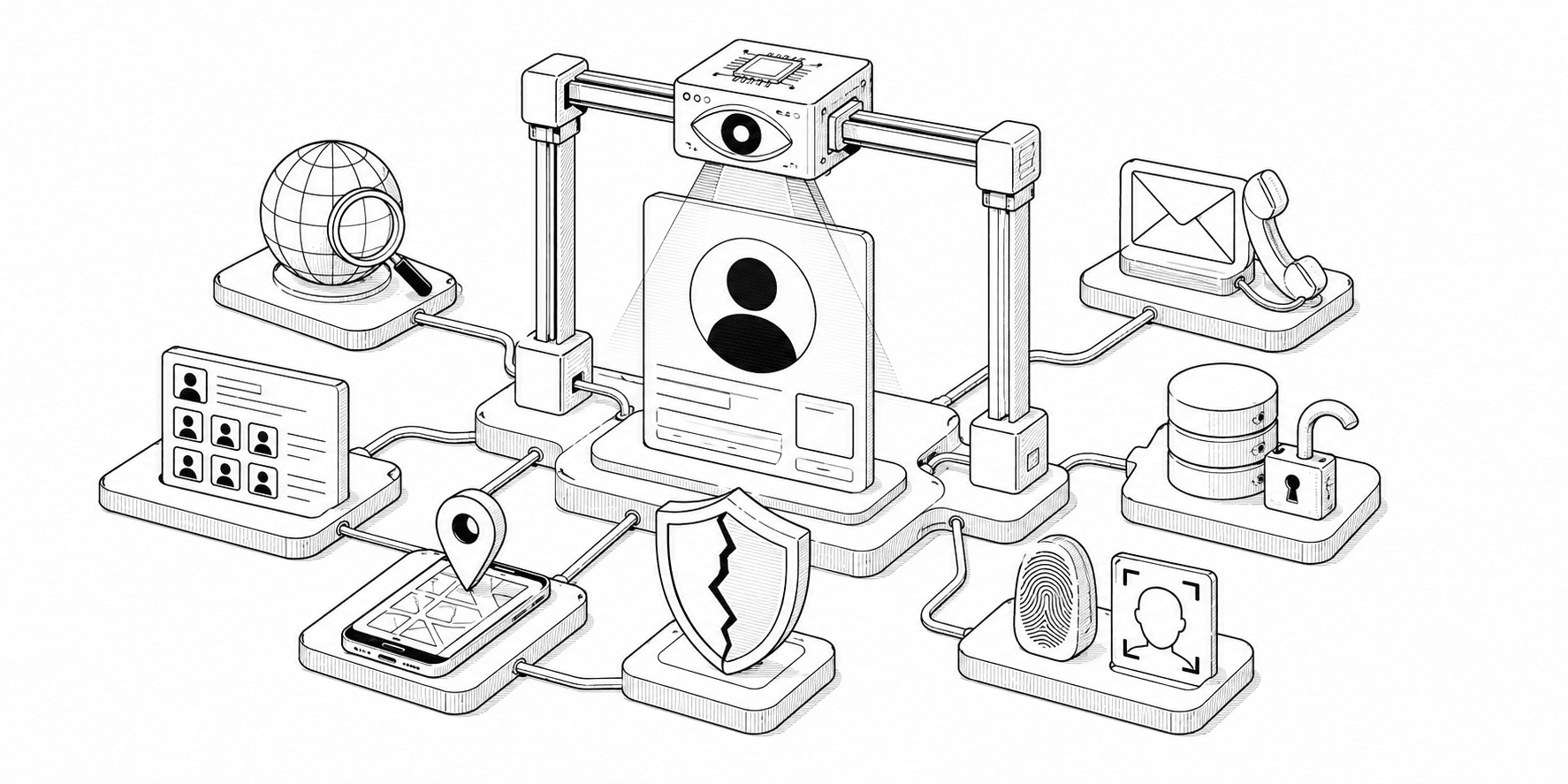
A name in a search box can expose more than a social profile. Public directories, old accounts, broker records, breach data and archived pages can form an identity trail. AI works with available sources plus supplied data. It does not create a verified person from thin air. Digital identities form through many pieces of information. Some pieces are accurate. Others are stale or linked to the wrong person. That gap between discovery plus verification creates digital identity risks.
Clearnym offers online identity protection for organizations that want to reduce employee exposure. Its business service monitors data brokers, people-search sites plus selected public sources for exposed employee data. Where removal is available, Clearnym submits authorized requests, tracks results plus watches for reappearances. It also offers secure reporting through a portal. This approach treats exposed identity information as a continuing privacy risk rather than a single cleanup task.
How AI Connects Identity Clues Across the Web
AI excels at pattern matching. One source may show a name plus employer. Another may show a phone number connected to the same identity. A third may reveal a date of birth.
A social security number carries far greater risk than a public username. Yet smaller details can support identity fraud when enough pieces align. Digital identities therefore become more sensitive as personal data spreads through the digital world.
AI can automate collection plus comparison. It cannot guarantee the truth. Old profiles, duplicate records plus mistaken matches still exist. Strong identity practices require context before a specific identity is treated as accurate.
Digital Identities and Identity Verification
Finding information is different from identity verification. Search locates records. Verification checks whether a person actually matches a claimed identity.
Identity proofing connects evidence with a person. Authentication checks control of an account or credential. Federation lets trusted services share identity assertions between systems. Each layer serves a different purpose.
| Function |
Purpose |
Main concern |
| Search | Find identity clues | False match |
| Proofing | Establish an identity | Fraudulent evidence |
| Authentication | Protect account entry | Credential theft |
| Federation | Share trusted assertions | Weak trust |
| Monitoring | Watch identity exposure | Missed changes |
Digital identity verification may use documents, account evidence or biometric verification. Biometrics can include facial recognition. Biometric data needs careful protection because it cannot be changed as easily as a password.
Why Connected Accounts Raise Digital Identity Risks
Every account creates another identity relationship. Federated identities plus single sign-on can interconnect digital services. Financial apps, workplace platforms plus shopping accounts may rely on separate credentials.
If attackers obtain an important credential, account takeover becomes a concern. Credential stuffing creates another problem. Attackers test a stolen username and password on other services.
Phishing-resistant authentication reduces dependence on reusable secrets.
Identity and access management teams focus on access control plus account lifecycle rules. Good identity management matches controls to risk tolerance. Low-risk online services do not need the same verification strength as banking systems.
Identity ecosystems also need clear boundaries. Service providers must federate accounts carefully because one vulnerability can spread. Some designs decentralize trust through cryptography. No ecosystem becomes secure through architecture alone.
Digital Identity Risk Management and Risk Assessment
Digital identity risk management starts with one question. What harm could follow if identity data is exposed, stolen or linked to the wrong person?
A practical risk assessment should examine where identity information appears and how well each account is protected.
- Identify exposed identity data
- Map where that identity appears
- Review credentials used for important accounts
- Check verification processes
- Plan continuous monitoring and periodic reassessment
The level of protection should match the possible impact of failure. Financial accounts, work systems and services holding sensitive data need stronger controls than low-risk accounts. Regular reviews also help detect changes as new records, breaches and fraud techniques appear.
Synthetic Identities and AI-Driven Fraud
Synthetic identities combine real details with invented information. A criminal may pair a real identifier with a false profile. AI can make fraudulent material more convincing through generated text, voice plus images.
Deepfake systems create added pressure during remote onboarding. NIST Revision 4 addresses forged media plus injection attacks during proofing.
Strong digital identities need layers. Device signals, trusted records, document checks plus attestation can contribute to verification. One control alone leaves room for error.
Threat intelligence also matters. Evolving threats change as technological advancements improve synthetic media plus automated attacks.
How Opting Out Reduces Identity Exposure
Opting out removes personal records from data brokers and people-search sites when removal is available. This lowers public identity exposure and reduces the amount of information available for profiling, phishing and identity fraud.
The process is simple.
- Find the matching record
- Open the site's opt-out form
- Submit the removal request
- Complete verification if required
- Check later to confirm deletion
Records can return when databases refresh. Periodic checks help keep digital identities less exposed.
Building Strong Digital Identity Control
Identity control improves when privacy work meets cybersecurity. Strong authentication protects accounts. Lower public exposure reduces the amount of material available for profiling.
Useful best practices include
- Use unique credentials for important accounts
- Enable stronger authentication
- Review public pages for exposed identity details
- Remove outdated records when removal exists
- Watch breach notifications
- Verify recovery details
- Protect a digital id used for account access
- Review connected applications
- Monitor evolving threats
- Apply continuous monitoring where risk justifies it
A trusted digital environment should authenticate each digital identity to access sensitive systems. Strong digital identity design also depends on accurate recovery methods.
Can AI Build Complete Digital Identities
AI can assemble digital identities from scattered records faster than manual research. That does not mean every detail is correct.
An immutable record can preserve data once written. It does not prove that the original information was accurate. The same limitation applies to identity verification systems.
Digital identities need accurate records. Digital identities need secure recovery. Digital identities also need limited public exposure.
This is why managing digital identity requires privacy plus security. Identity information should be removed from unnecessary public sources when practical. Account defenses should remain strong.
Conclusion
AI changes the speed of discovery. Identity exposure can spread quickly. Public records, people-search databases, social profiles plus leaked material can expose fragments that AI connects into digital identities.
The response should combine data privacy with risk management. Reduce unnecessary identity exposure. Strengthen authentication. Review digital identity risks before they support identity theft.
Strong digital identities depend on clear verification, controlled collection plus continuing review. Identity systems work best when privacy plus authentication support each other.
FAQ
Can AI verify an identity from a name alone?
No. A name is an identifier rather than proof. Reliable identity verification needs stronger evidence before a system can verify a person.
Yes. Copies can remain in archives, data broker systems or previous breach collections. Removal lowers exposure without guaranteeing that every copy disappears.
Can a digital identity stay secure without biometrics?
Yes. Biometrics are one possible factor. Authentication strength depends on the complete design plus the level of risk.
AI can generate fictional profile content. Synthetic identities become more dangerous when false material is combined with real identifiers or compromised records.
Does stronger authentication stop every identity attack?
No. Authentication protects account access. Privacy exposure, social engineering plus weak recovery procedures still matter. Strong identity security combines several controls.